



|
|
|
|
Lookout Mountain Park Funicular Railway - Golden, Colorado
- Written April 30, 2026
Text and photos by Dave Parsons
Historical photos from the Parsons Collection unless otherwise identified
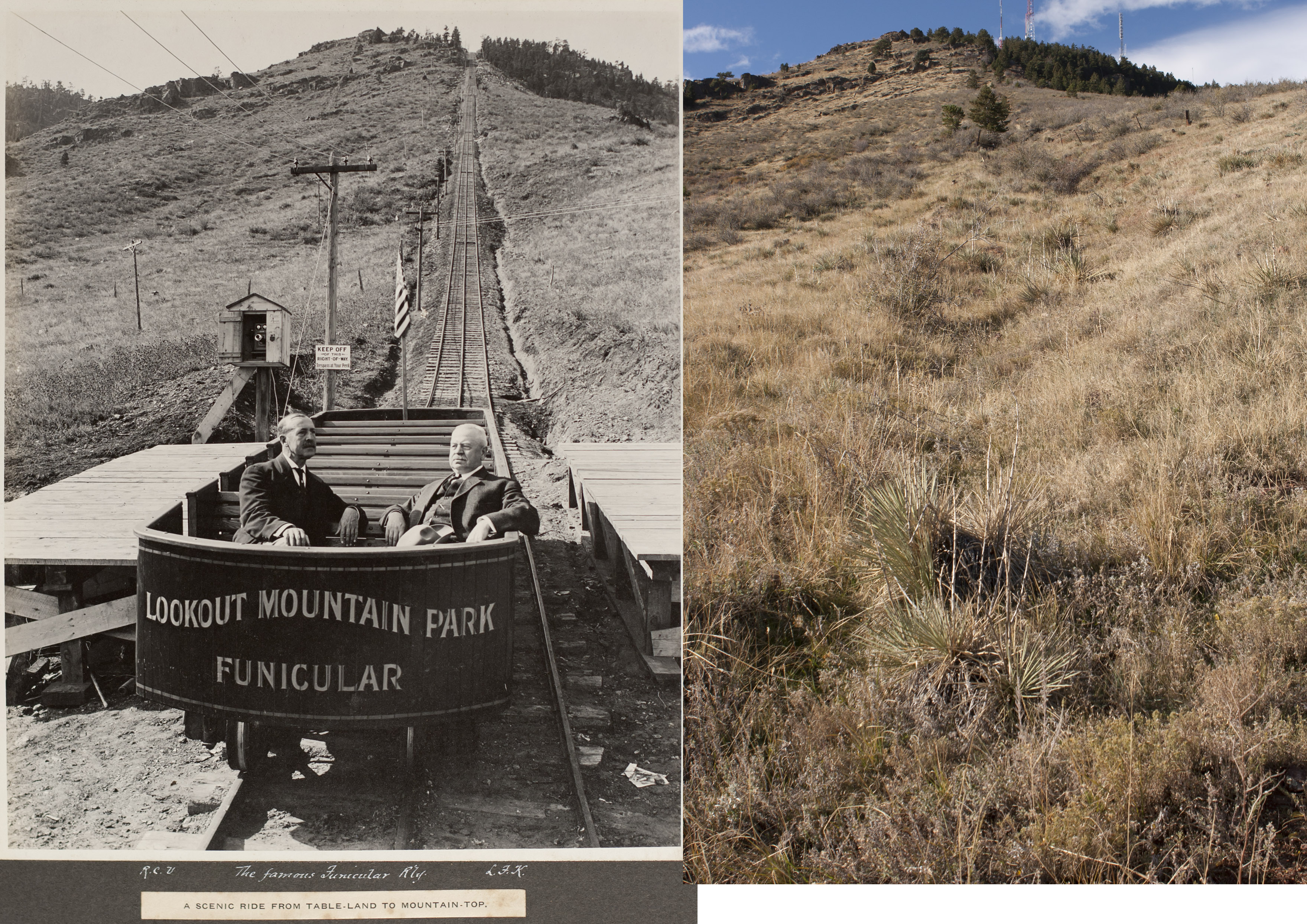
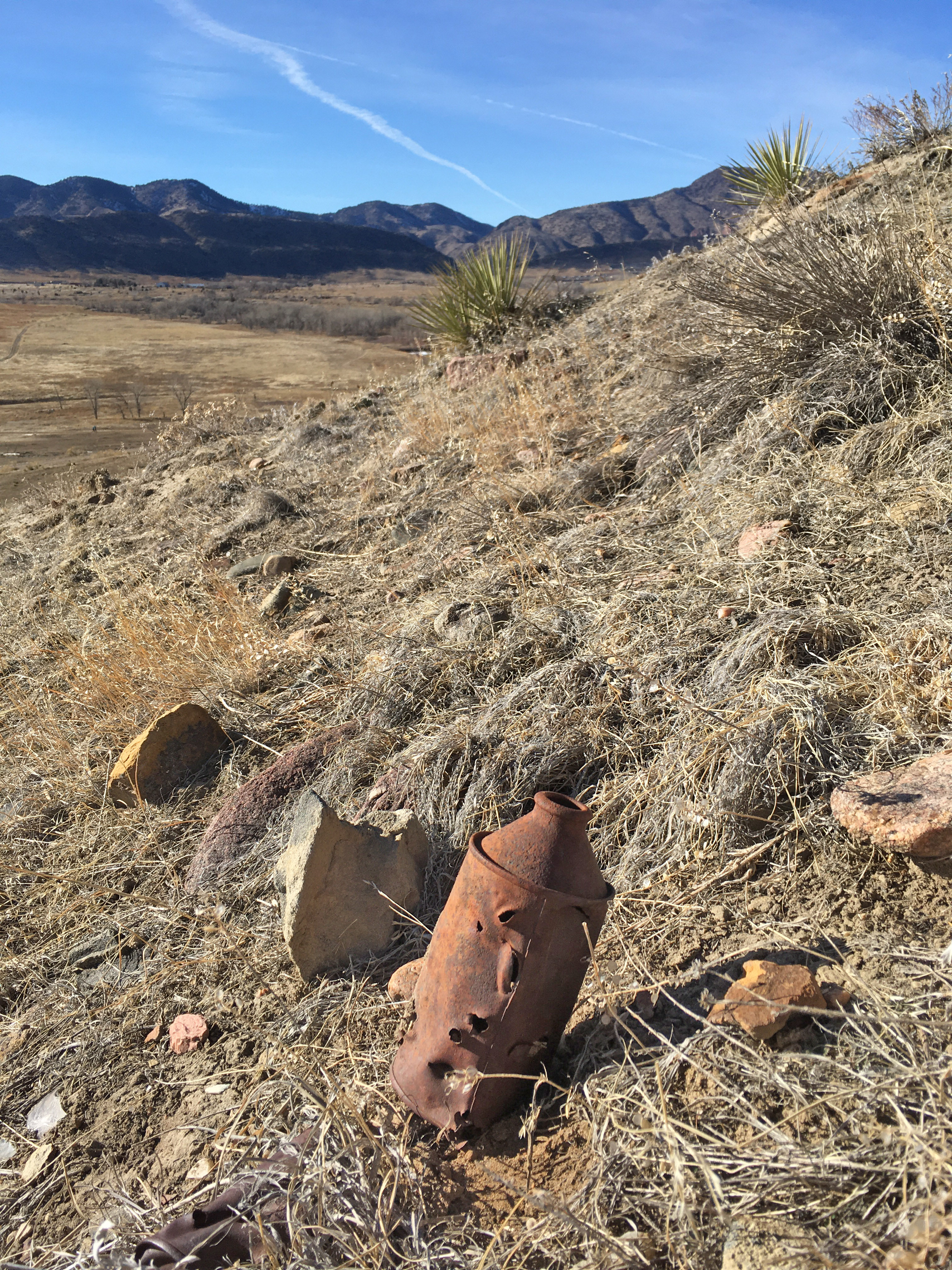
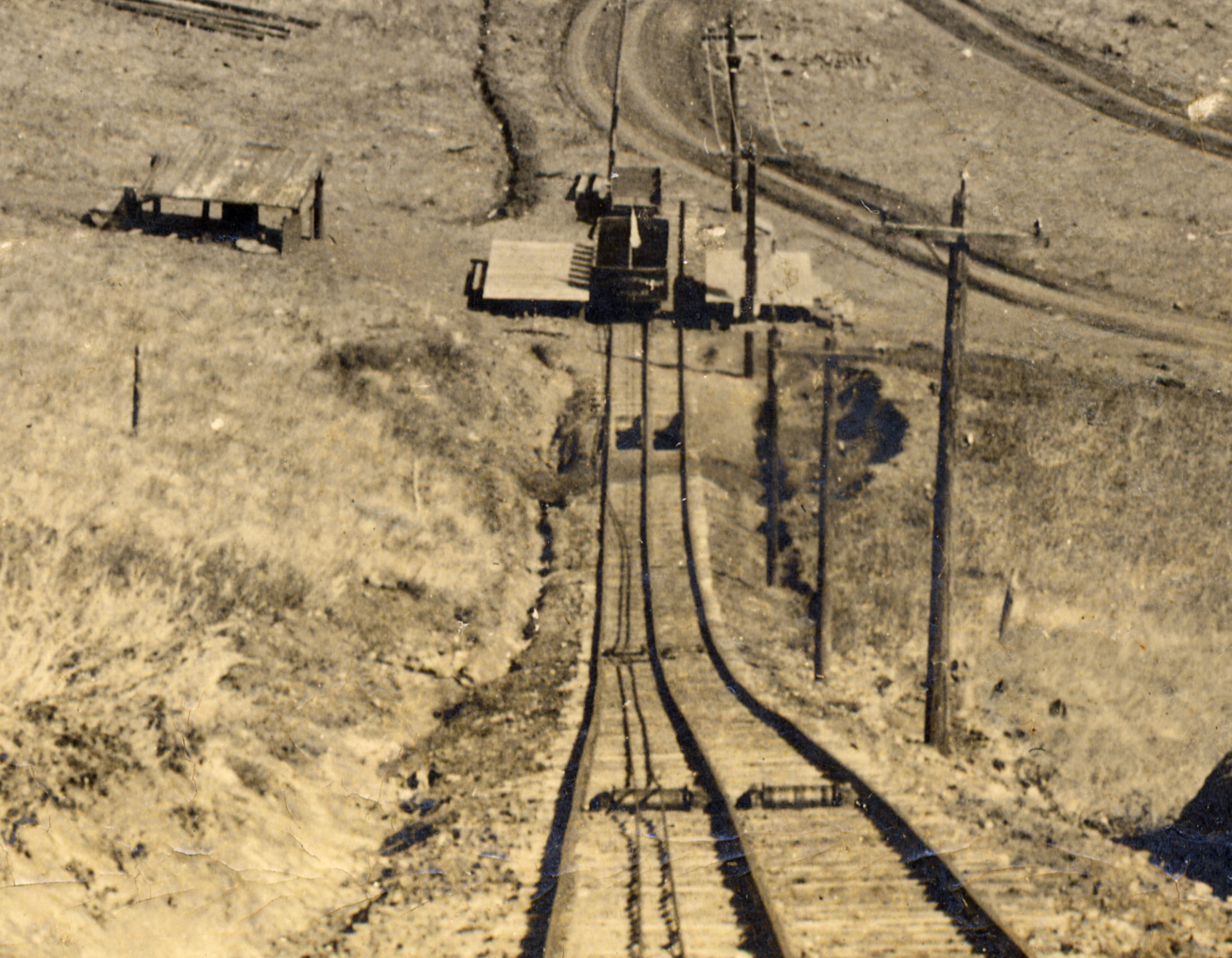

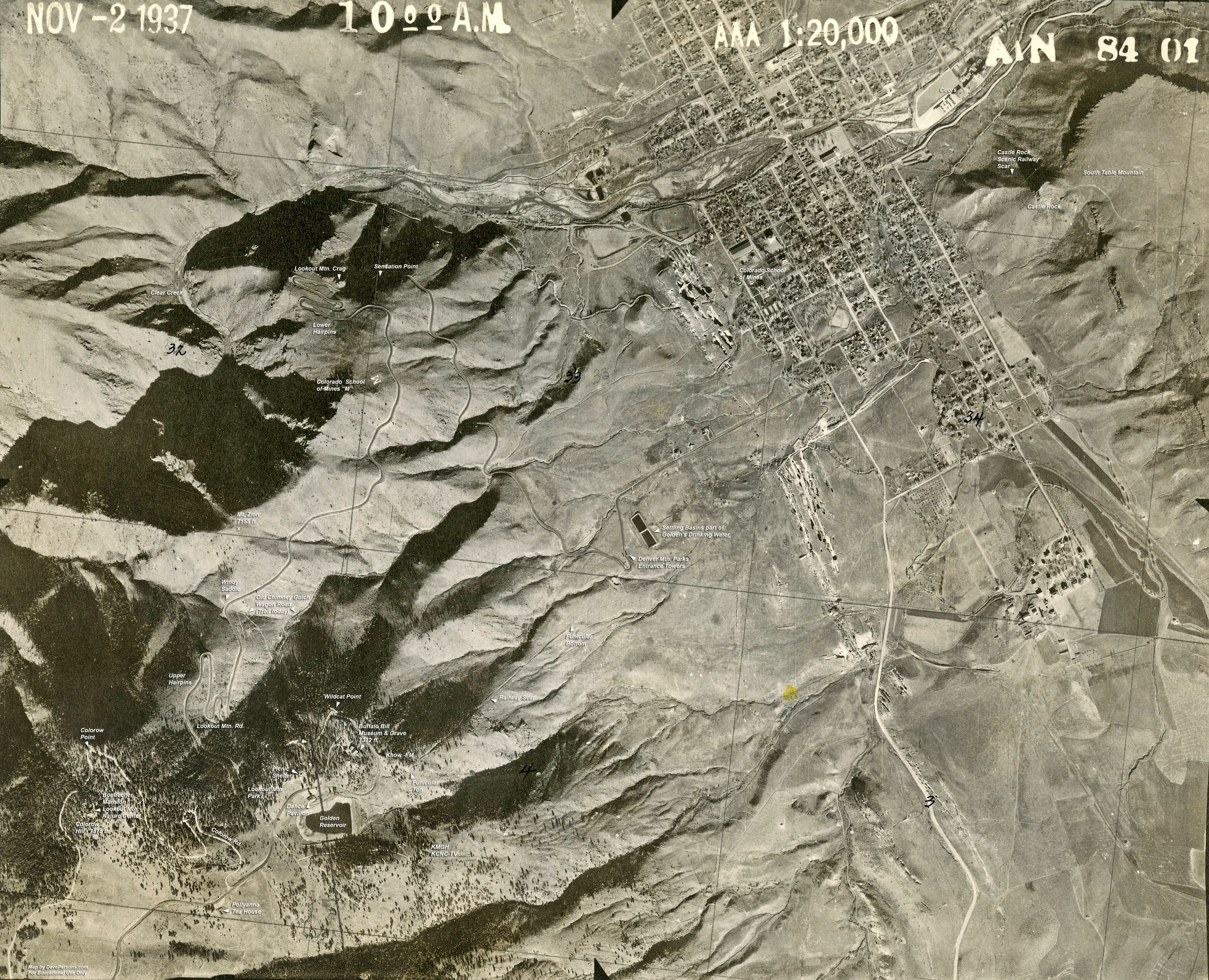
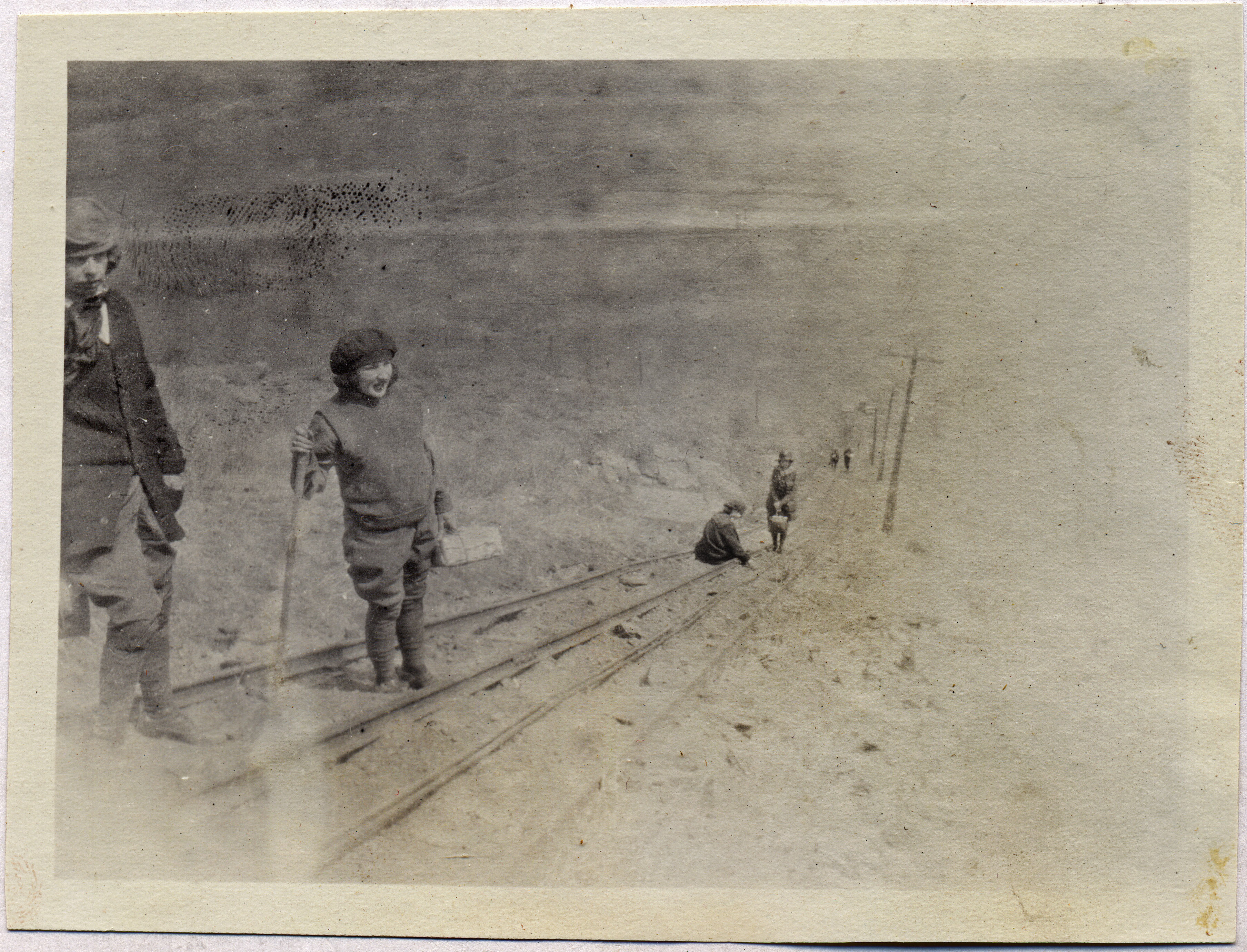
Our first time on the mountain was back in the late 1970s when my brother and I were scouring the cliff sides for old beer cans, a hobby introduced to my elementary school aged sibling by his friend. We were specifically looking for elusive "cone tops," the earliest variation of the alcoholic beverage container we were’t near old enough to drink from yet. With dad driving us in his land yacht Oldsmobile, we stopped at overlook points, like "Wildcat Point" and would hop out of the car and slide down the mountain and traverse the hillsides and cliffs below the roadsides looking for rusty remainders from the past where litterbugs had once tossed their trash - as the saying goes, "one man’s trash…" We would find red, rectangular tins of flip-topped Prince Albert tobacco cans, old, broken coke bottles, as well as Pabst, Carlings Black Label, Coors Banquet, Falstaff and Schlitz cone tops and cans wedged in the rocks or buried in the pine needles. We would rummage through the morning and at lunch we would yank from a pocket, a blue, checker patterned, paper bag with our squished pj sandwiches and homemade banana bread mom had put together. After eating and likely in dire need of a tetanus shot, we would gather up our rusty take and return home and apply naval jelly rust removing goop to the better preserved cans. There always seemed to be a split condition of the can where one side, usually the buried side, was more protected from the elements and less faded. Colors and logos would slowly revive through decades of exposure after scrubbing and repeated cleaning. The final product would be placed on a shelf to be admired or traded by my brother, since I didn’t even know what beer was. But I enjoyed the adventure chasing after the old junk, a mountain mudlarking of sorts. 29 years later, we were again on the hunt for more history other than beer cans, this time searching for another Colorado ghost railroad (See Morrison Funicular story). It was October 25, 2008 and my father and I were in Golden, Colorado, returning to base of Lookout Mountain following the route of another funicular railway that was constructed in 1912 by another early scheming English businessman looking to create a resort on top of the mountain. Driving through the Lariet Loop Gateway Entrance to the Denver Mountain Parks, a pair of upright stone pylons constructed by Finlay L. Macfarland in 1917, we parked at a small dirt parking area on the cool October morning. We hiked past the giant cheese wheel water storage tank and quickly found the vertical scar in the mountain side now partially filled in with slumped soil, yuccas, shrubs and grasses. Holding up an early photo taken from the base of the railway about 1912, we shuffled from side to side to match the general appearance and I took a few digital photos with my 8 megapixel Canon 20D.
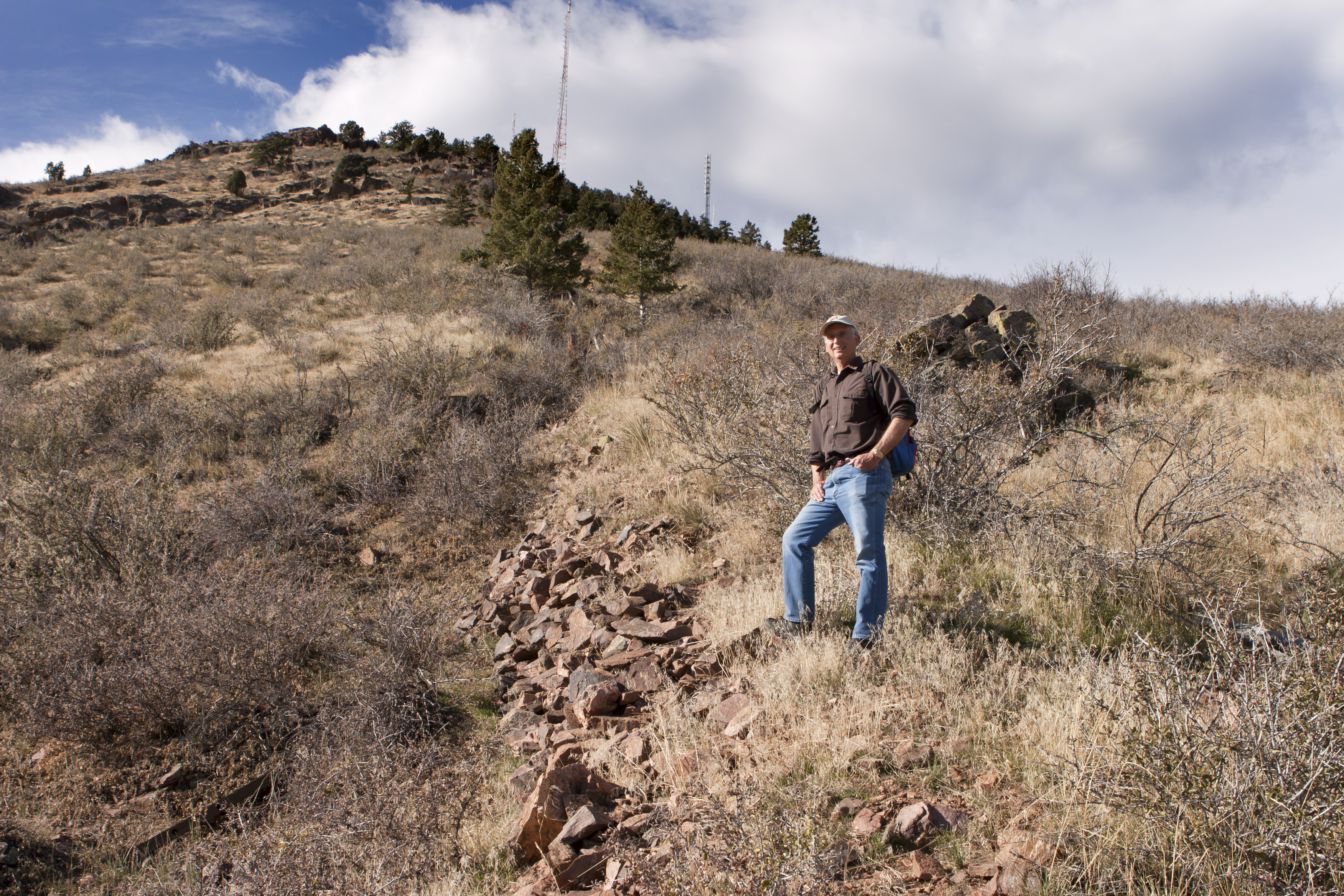
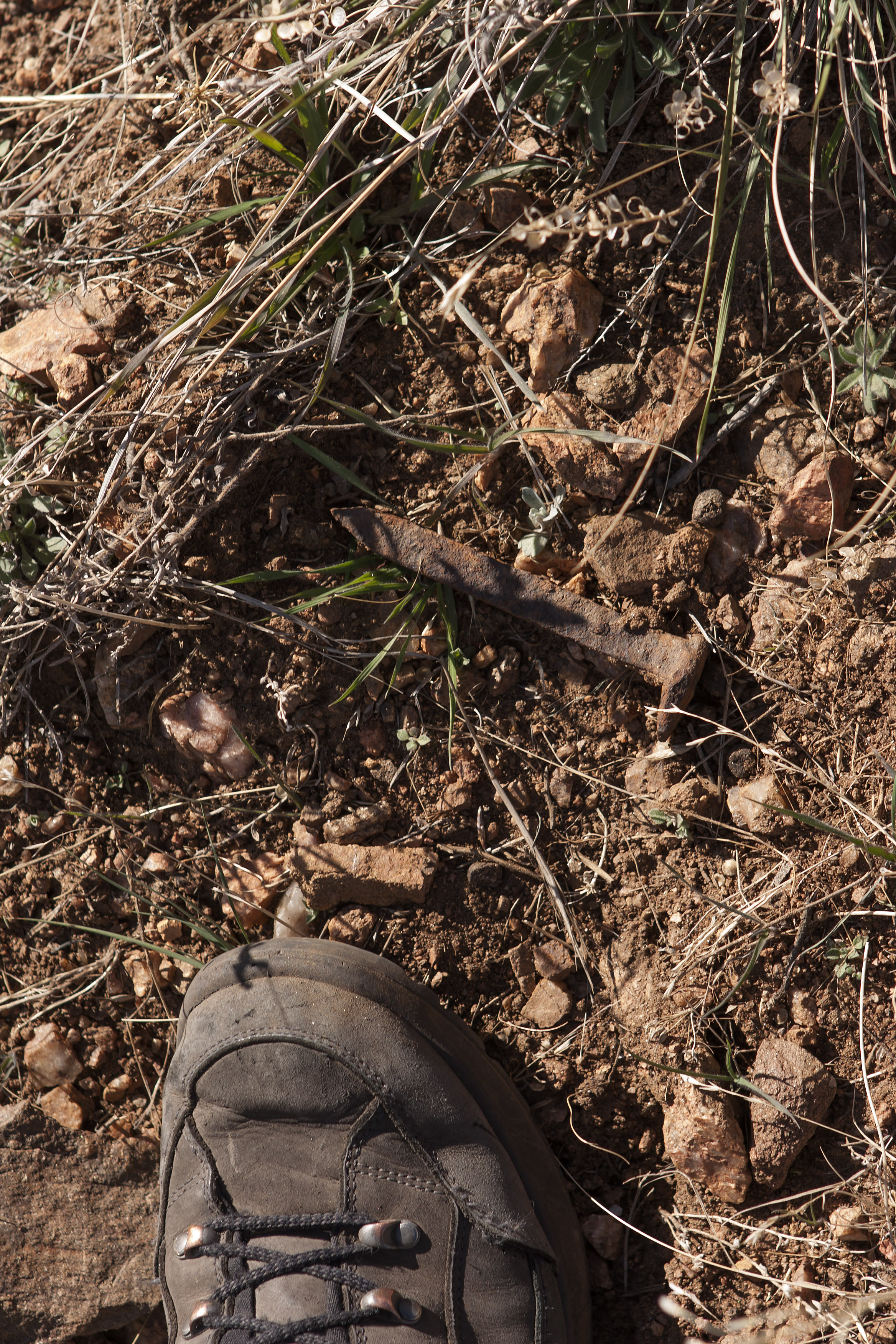
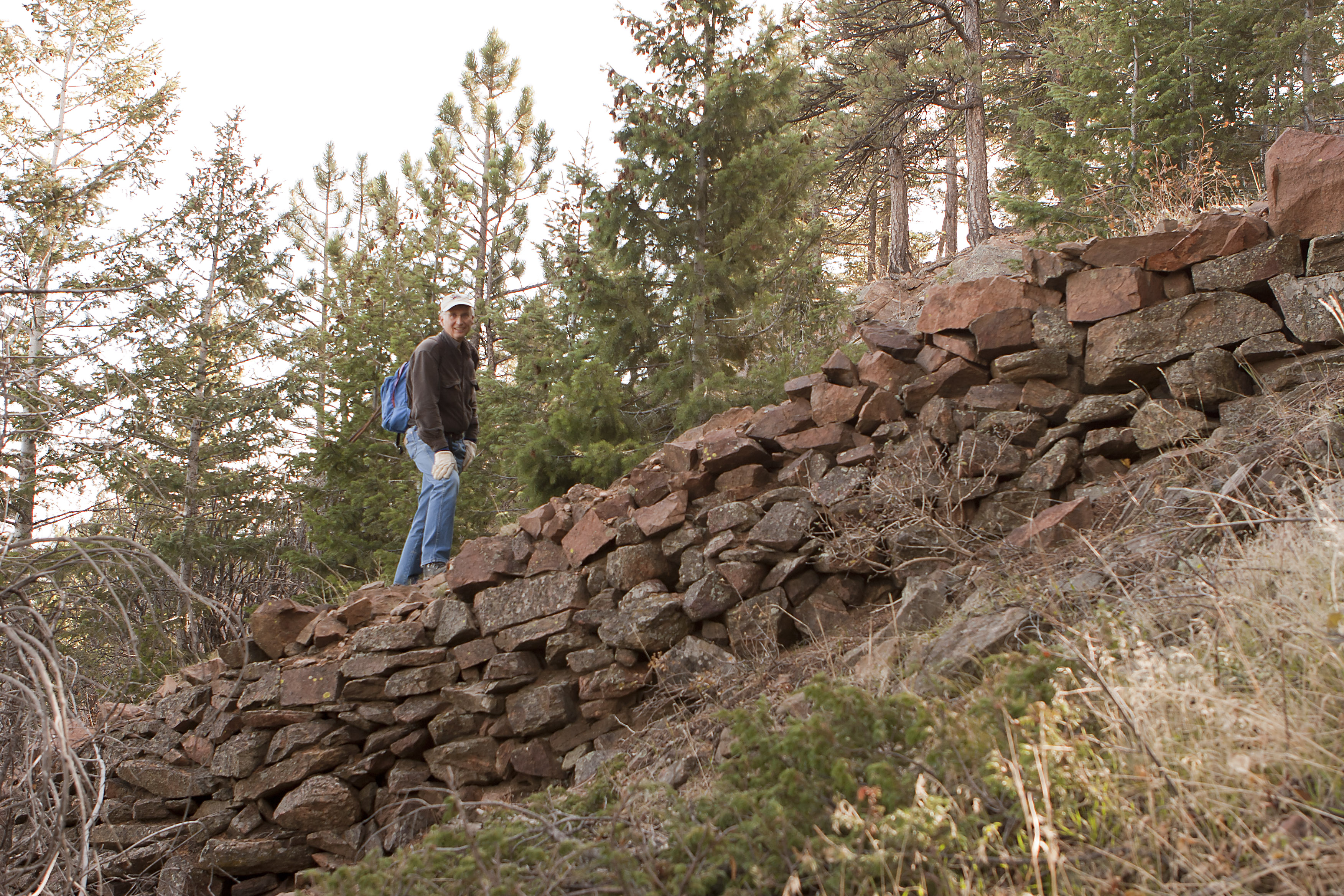
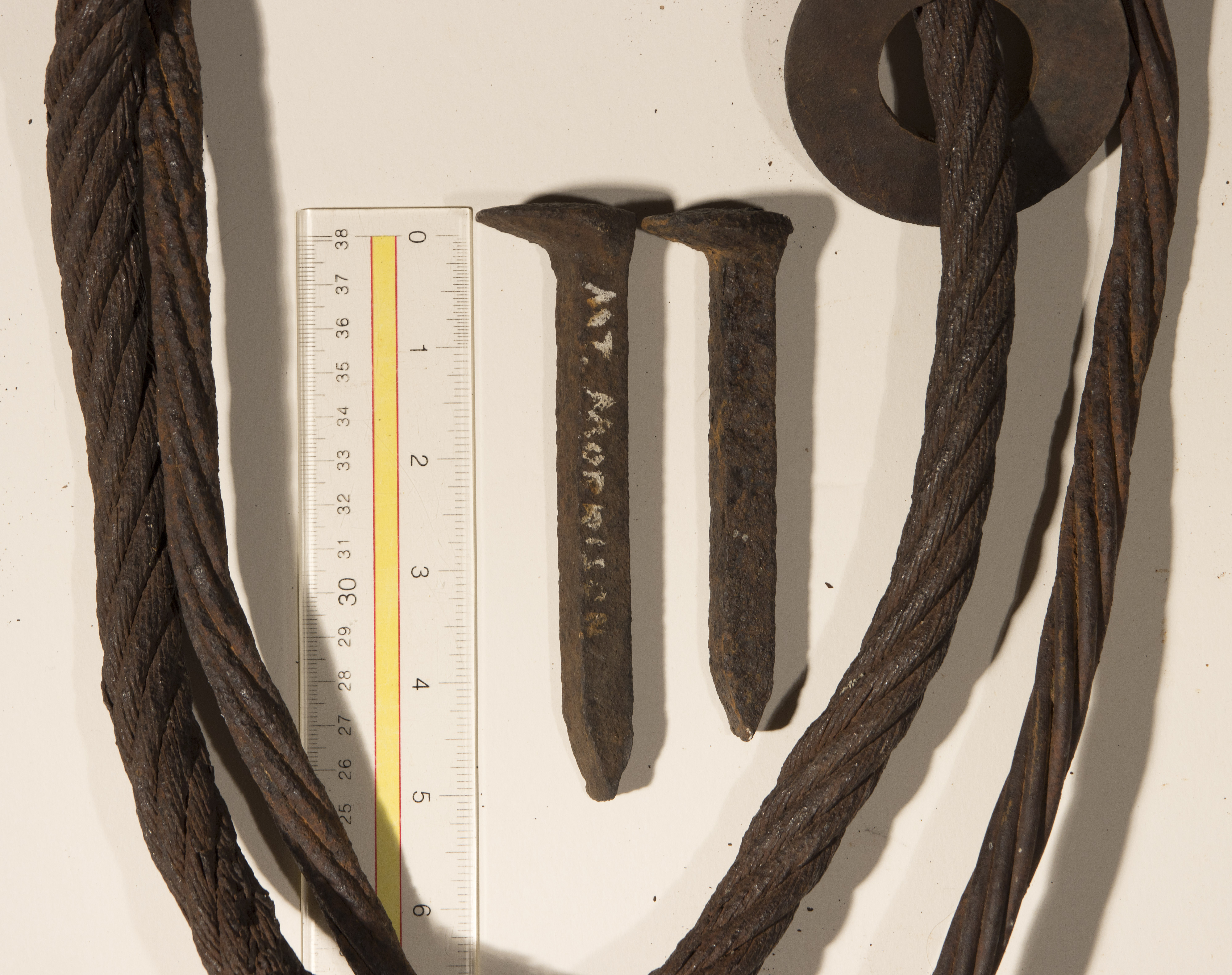
Rolling up or sleeves, we quickly warmed up, climbing the steep incline path in the morning sun. Rough stones still stacked for a foundation that once supported the railroad grade showed the way up the mountain. Lying in the grass next to the foundation, a heavy and rusted steel rail still remained after almost a hundred years. Most of the rails were salvaged, however, the collision of sliding rails years ago caused a 200 acre fire to sweep across the mountainside in 1930.
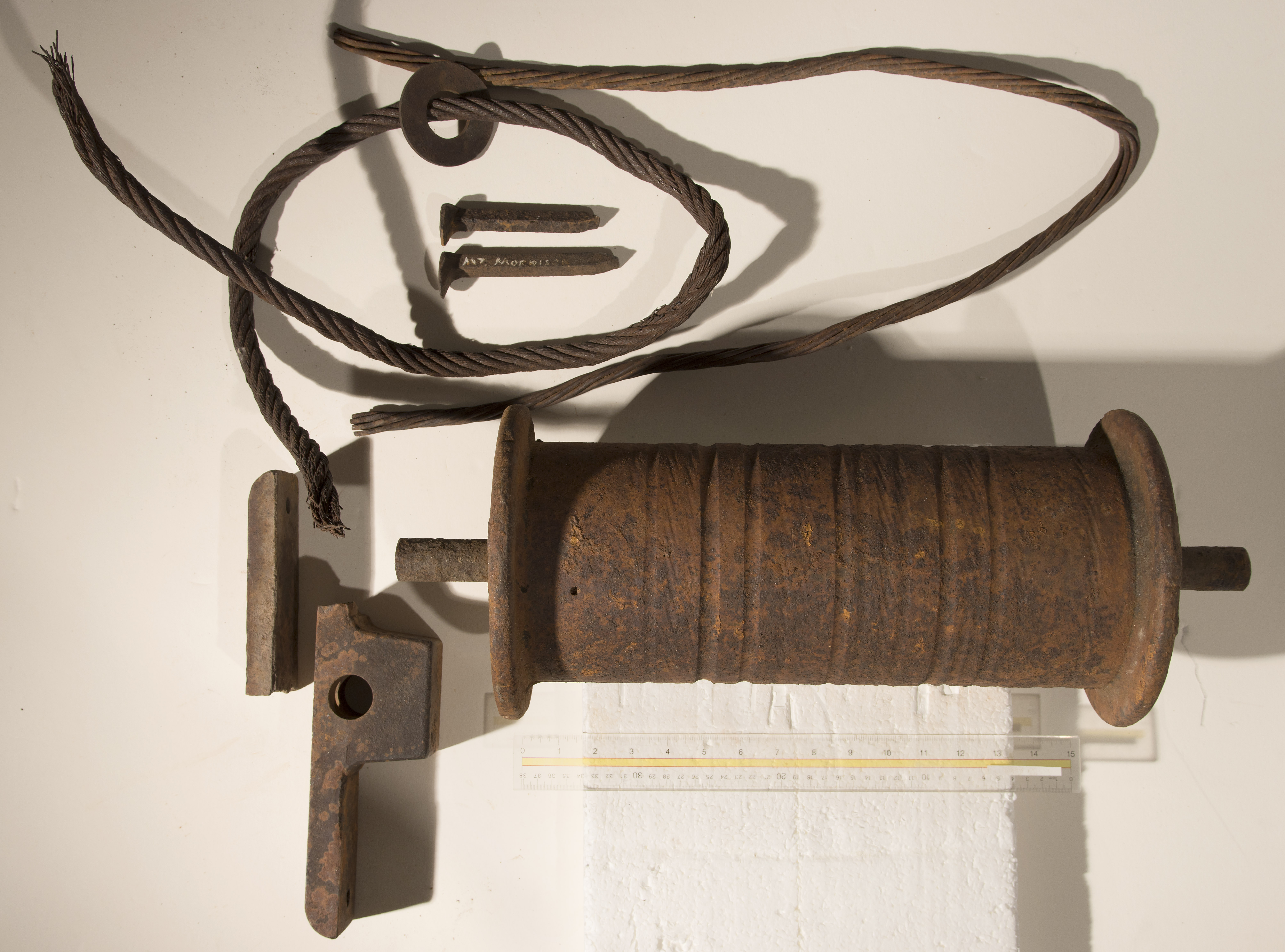
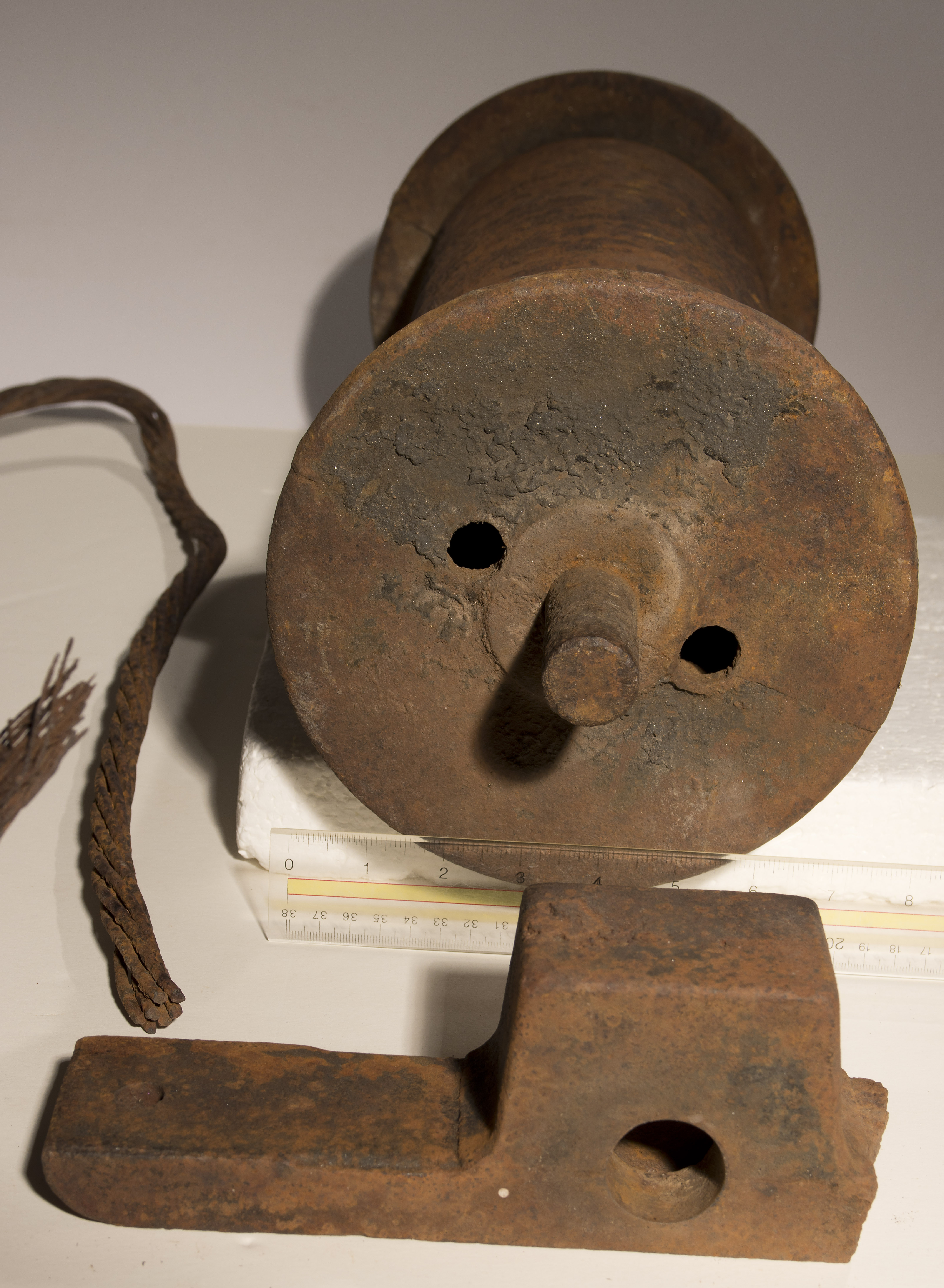
Near the midpoint, we passed through some, gray scrubby clumps of mountain mahogany. The grade became steeper and higher on the mountain as we climbed in the shade of Ponderosa and fir trees. In the thick pine needles on the north side of the grade, we encountered a odd shaped piece of broken metal, heavy and with a horizontal and vertical hole. Nearby, we would find its other broken half and later determine it was part of a roller mounting bracket once installed along the railroad ties to help support the cable as it slid up and down the tracks. A few feet higher, an old style, embossed, glass Pepsi Cola bottle with red and white curvy lettering and a broken top was nestled into a bed of pine needles.
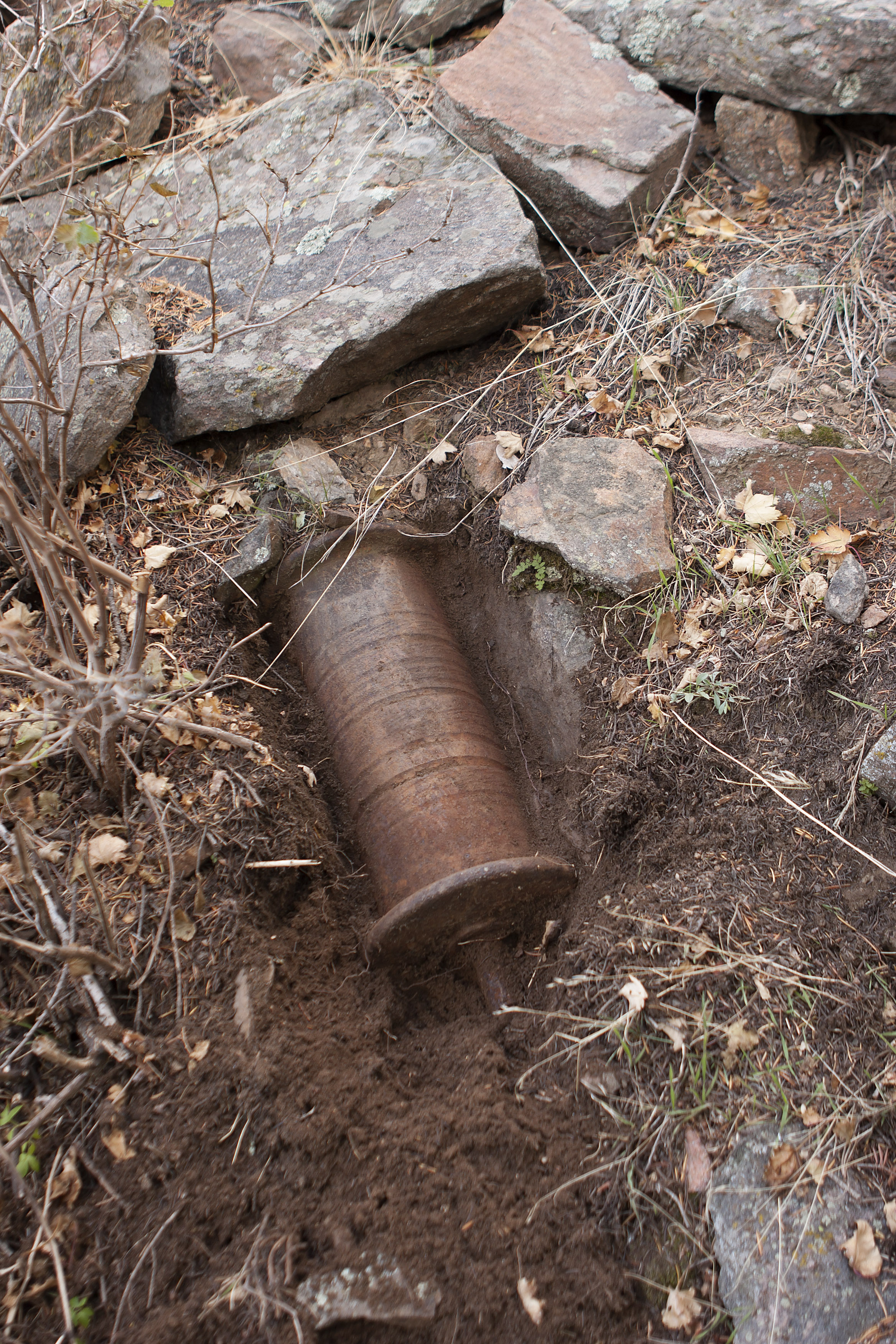
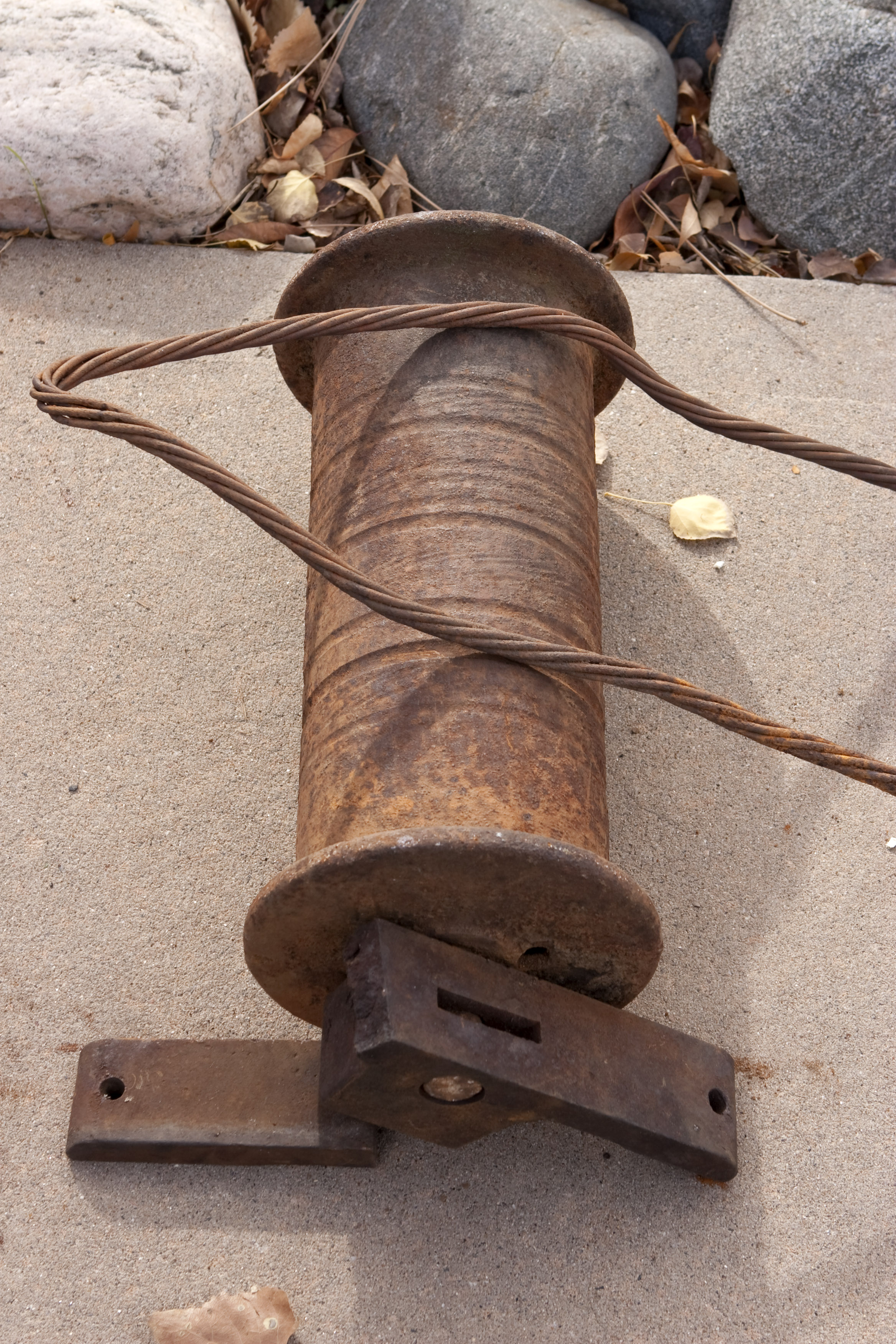
Higher on the mountain, clouds rolled in as a trio of large eared mule deer browsed in the shrubs under a stand of Ponderosa pine. Alerted to our presence, the smaller yearling with another female watched us intently and aimed their fuzzy ears towards us like radar dishes. Nearby, foundation stones were stacked four and five feet tall in this stretch at the top. Near the base of the stone wall, a curved, rusty piece of metal peeked out. Sitting down on a rock, I cleared a layer of pine needles and light top soil off to expose a large cylinder about two feet wide with posts sticking out of the ends like a giant rolling pin. This was one of the 47 pound rollers supporting the cable. Deep cable grooves incised the full length of the heavy metal cylinder. A thick raised rim on each end prevented the cable from sliding off. Now closer to the gigantic antenna looming over us, we decided to head down with a few of our rusty discoveries. Following a similar path down the mountain, we enjoyed the views from our high perch of the town of Golden and South Table Mountain with Castle Rock to the the east.
The panoramic views of the mountain have long been sought out by numerous peoples. The Ute long used the mountain as a campground, for hunting and view post, watching for bison and other tribes like the Arapahoe and Cheyenne across the vast plains to the east.
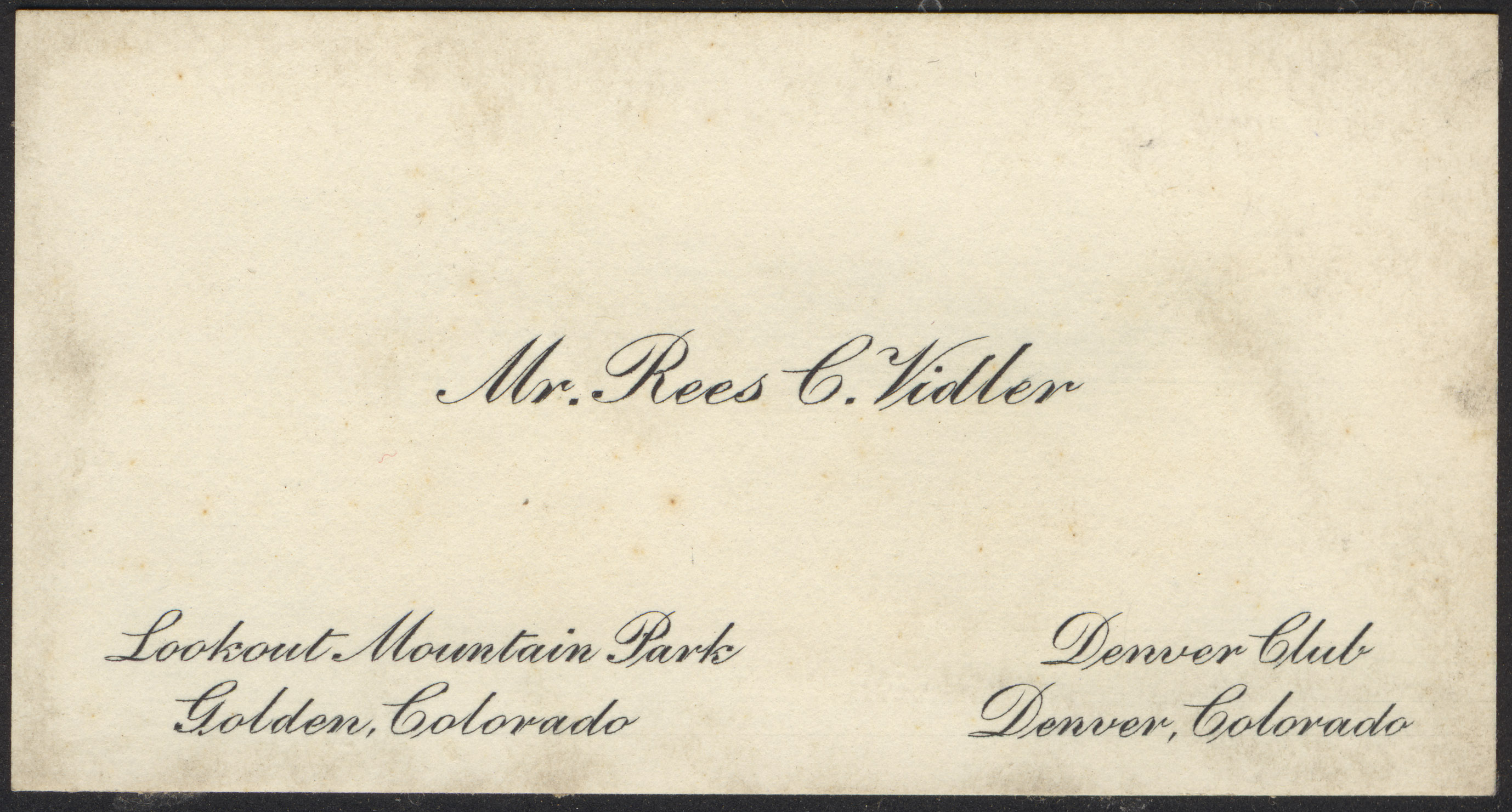
Rees C. Vidler, a London born millionaire minerals magnate was active in the mining industry at its height in Idaho Springs, Georgetown and other Colorado Front Range districts. The wheeling and dealing businessman had been accused of ballooning his companies stock price by artificially inflating its value based on false information. During the "Vidler Tunnel Scandal" near Georgetown in 1907, the company investors, including his son Louis Vidler "grossly misrepresented the veins and ore bodies" according to an employee of the State Bureau of Mines. The March 13, 1908 Herald Democrat also reported that he "disposed of all of his holdings, and rumors connected with the entire transaction reflect on him seriously." The Transcontinental Mining, Tunnel and Transportation Company were selling overpriced shares on the London stock market which the company spent on an expensive mill and "administration expenses." Yet the mill only yielded about $200 of ore after the company spent $264,000. After 18 months, the company filed for bankruptcy with assets that "have no particular value except the mill machinery." There was a failure of both American and English stockholders to evaluate the "true value" of the tunnel venture after Vidler told investors in London in 1906 "that within 12 months the company would be paying enormous dividends." His son Louis protested the accusations and and stated they were attacks by other interests. In the Georgetown Courier in March 21, 1908, he commented "In the absence of my father, Rees Vidler, in the East, it may not be out of place for me to say something in reference to the malicious attacks that have recently been made upon him through the public press, in connection with the affairs of the Transcontinental Transportation Mining company." He downplayed his father’s involvement stating "The charge that from his modest office in the little hamlet of Georgetown, Colo. he can manipulate the market of stock upon the London stock exchange is too absurd to require a reply." He continued: "My father is an optimist, but if he is to be condemned for this, all the people who during all the years have developed the mines of Colorado must likewise fall under the ban. He believes in the Vidler tunnel. He believes in its transportation features, and that it will open up to the city of Denver and the markets, the Montezuma and Argentine mining districts in Summit county." While the "kiting" of stock eventually forced the company into bankruptcy and quashed the tunnel, it likely affected Vidler’s parallel scheme with the Lookout Mountain Park Development Company which started with a $50,000 purchase of Lookout Mountain resort property in 1906. Copying the late Senator Tabor’s existing resort plan from the 1890s which failed during the 1893 Silver Panic, Vidler would attempt to run the old Denver, Lakewood, & Golden rail line as near to the top of Lookout mountain close as possible, and continue "it up Mt . Vernon canon as far as Idaho Springs, then on to Georgetown, up Argentine pass, and eventually through the Vidler tunnel to the other side of the range." According to the The Colorado Transcript, June 6, 1907, "it is evident that they saw the possibilities that lay in securing the Lookout mountain site as a side venture, in connection with their tunnel proposition." The article also reported "last Saturday the 2,300 acres comprising the resort site, including the mountain itself, were sold to a syndicate headed by Rees C. Vidler, of Georgetown, for $50,000. Associated with Mr. Vidler in the venture are W. A. L. Cooper, L. F. Kimball and a number of English capitalists."
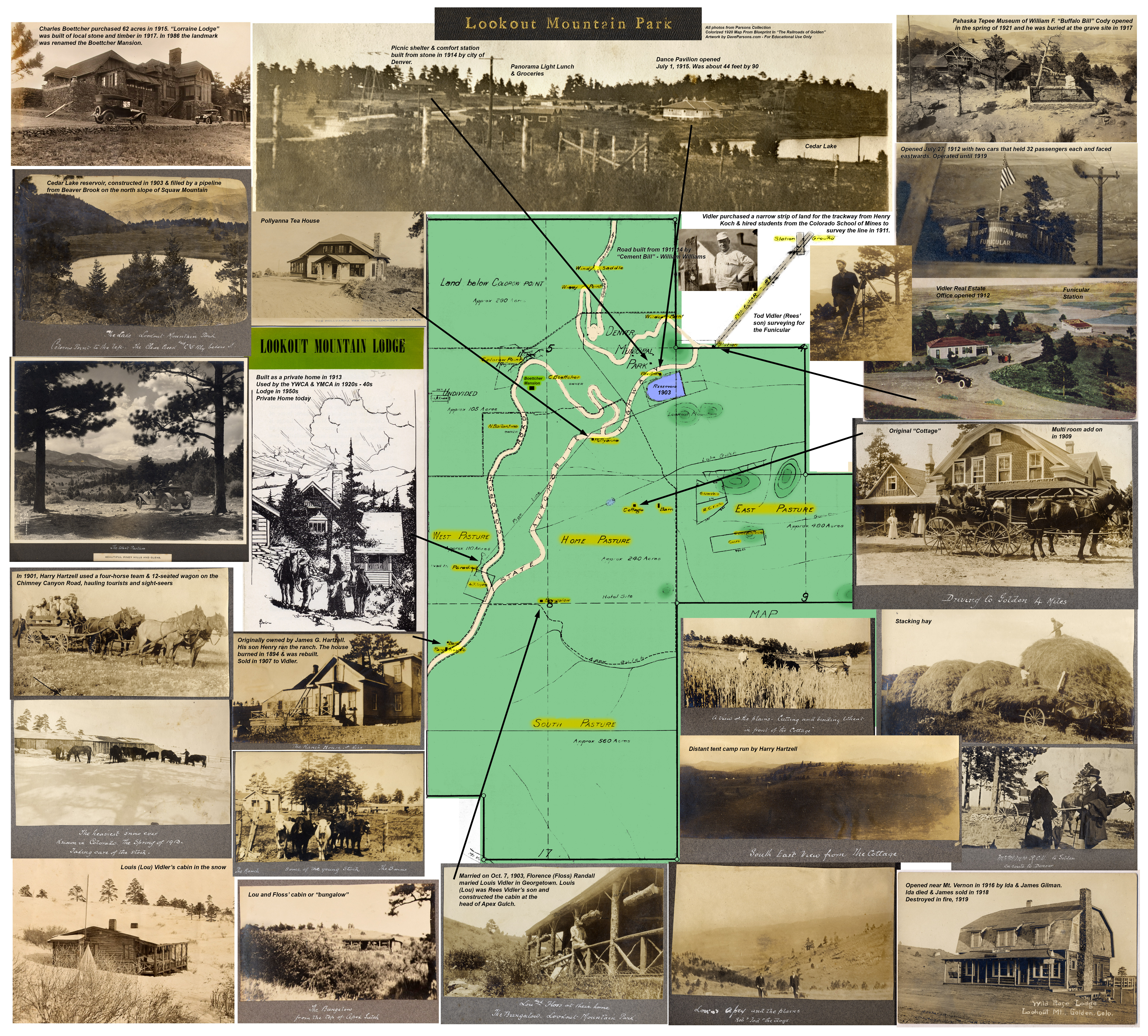
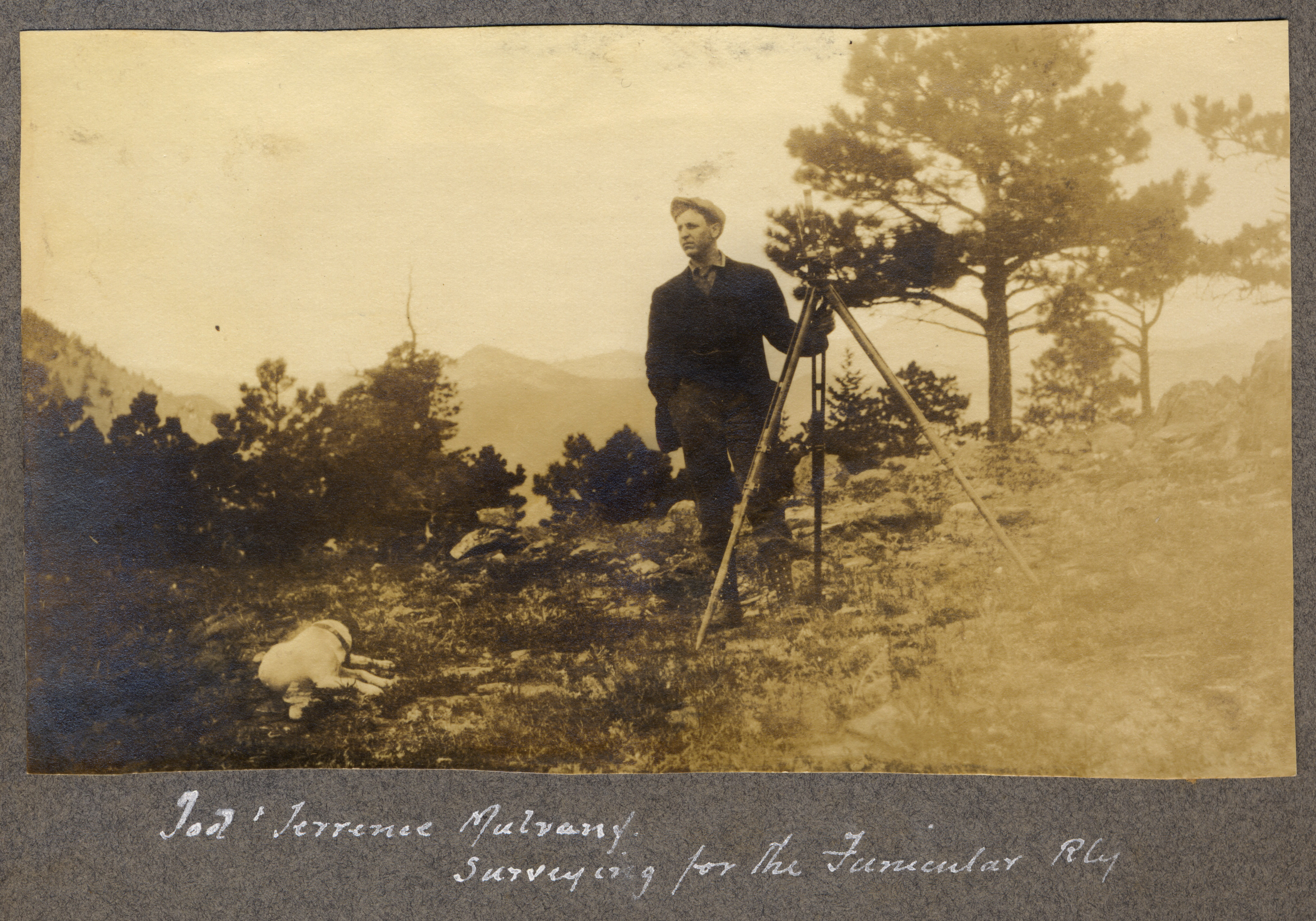
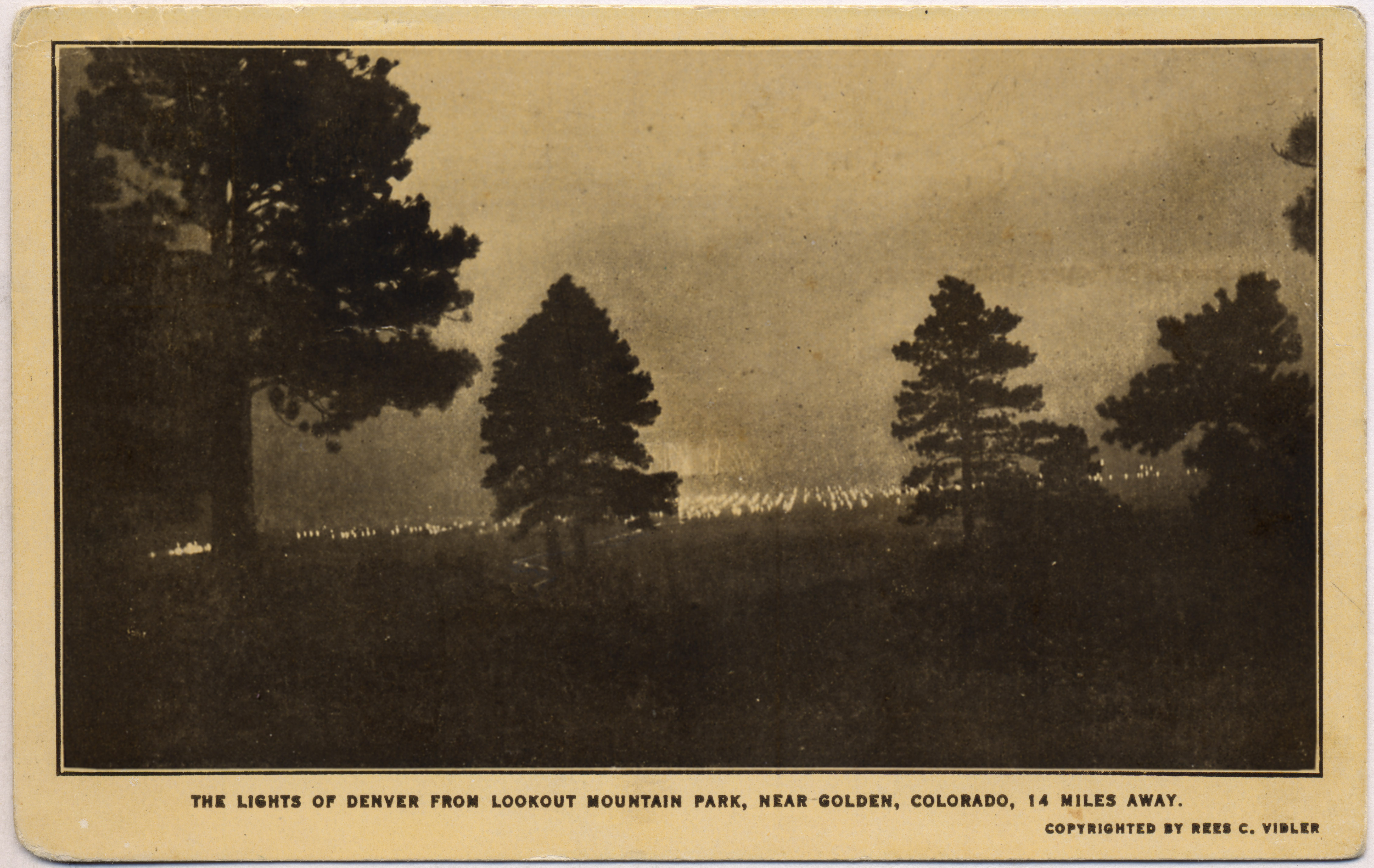
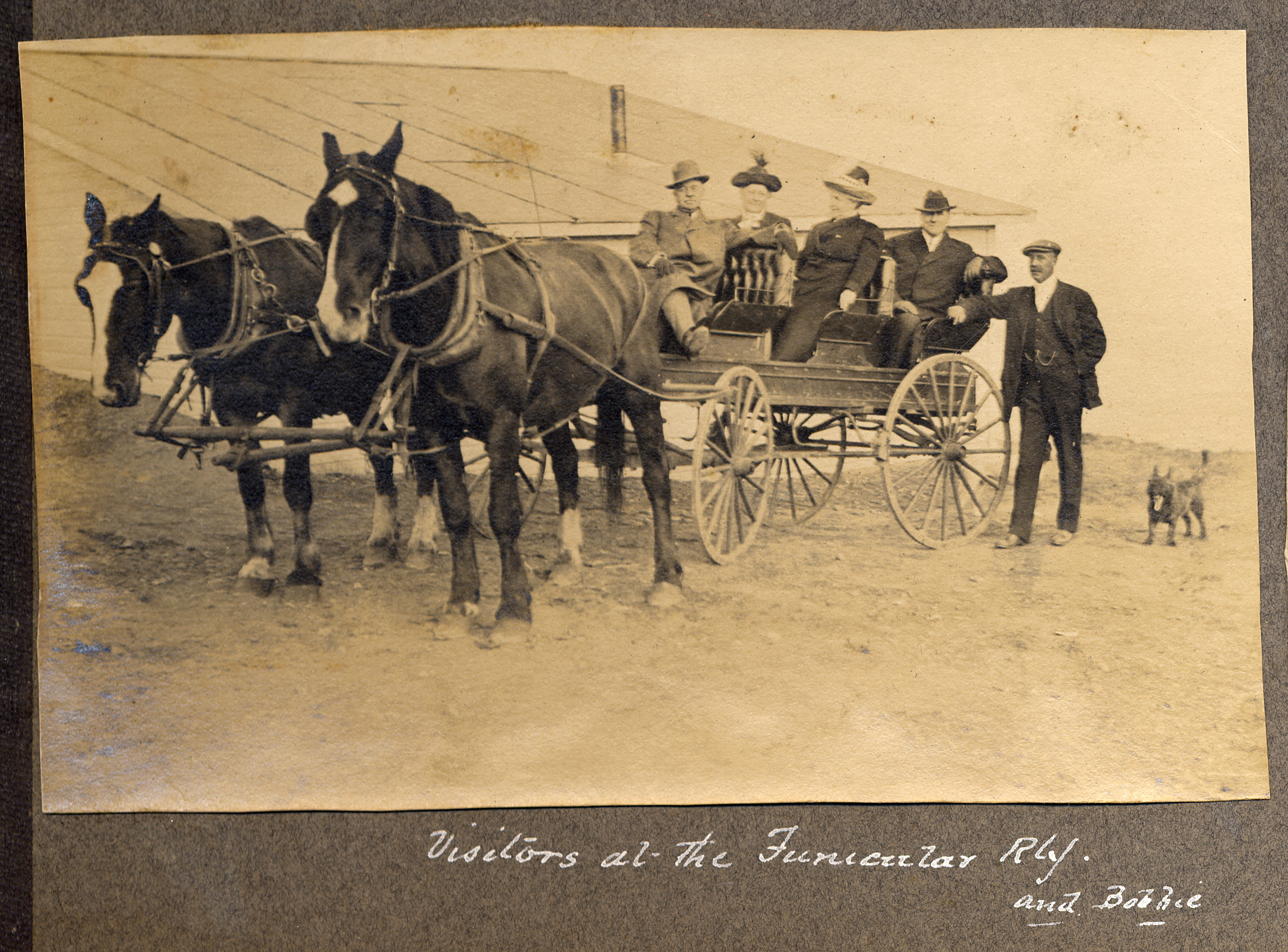
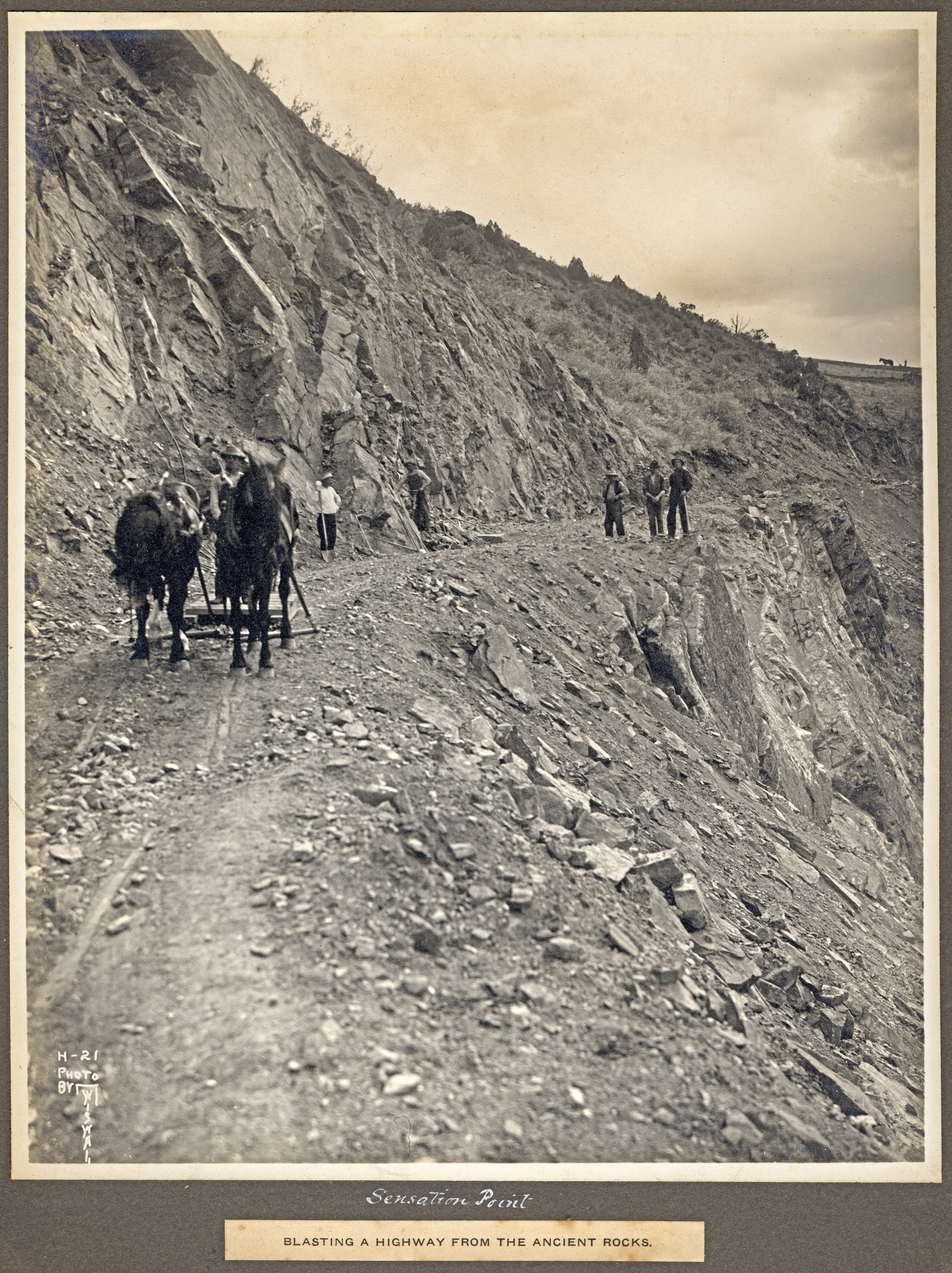
Now more focused on Lookout Mountain, Vidler moved into the property once owned by Harry Hartzell. On December 7, 1907, the Golden Week Globe reported "Rees Vidler Jr. will occupy the Mt Lookout ranch next year now occupied by Harry Hartzell. We do not know whether or not Harry will continue to operate his stage route that he has spent considerable money on in equipment and advertisement, and made so popular, but presume so." Now enjoying Hartzell's old stomping grounds, Vidler would explore and literally survey his new domain with his son Tod, including a potential site for a railway to the top of the mountain as a way to generate future sales and interest in the Lookout Resort. Maps and development plots with hotel locations were drawn up and they eventually filed a subdivision map with Jefferson County on May 31, 1910. In the years after 1908, Vidler and his family lived on Lookout Mountain and added onto the original and modest "cottage" and along with numerous workers, raised milch cows, grazed horses and harvested alfalfa and wheat on top of the mountain while Rees also worked to construct a railway up the mountain. The small two-story cottage more than tripled in size and housed 11 rooms while his daughter Kate occupied the nearby ranch house and farm once operated by Hartzell. His son Louis "Lou" and wife Florence "Floss" Randall Vidler constructed a rustic "bungalow," a small, single story "round cabin," built with logs retaining their bark, at the top of the Apex road and south of Rees Vidler’s expanded homestead. Rees Vidler would have numerous parties and entertain friends, families and potential investors at his expanded compound. Likewise, he would drum-up interest in the resort idea. During one visit with at least three wagonloads of visitors including "Various Committee Men and their wives and friends of the Chamber of Commerce, Real Estate Exchange, Live Stock Exchange, Traffic Club, etc. etc." they took their "first trip to Lookout Mountain Park as guests of Mr. and Mrs. Rees C. Vidler" in the summer of 1910. Rees, an amateur photographer, would also take pictures of visitors, friends, family, crop harvesting on his property, family pets, snow storms, ranch life and even experiment with time exposures. During one nighttime storm, he set up a tripod to take long exposures of the lightning with the city lights of Denver taken from his front porch. Ever the salesman, he even published a Lookout view post card of his 2 hour 20 minute exposure with the lightning in the distance over the Denver city lights with the Colorado Central train’s headlight snaking its way westwards along Clear Creek. A few more of his photos were even published in the May 8, 1909 Denver Municipal Facts.
But his main interest was money and business and as a way to generate future sales and interest in the Lookout Resort, Vidler and his British partners in the Lookout Mountain Park Development Company purchased a narrow strip of land for the funicular trackway from Henry Koch, another early Golden resident who owned the land at the top edge of the mountain (and later, where Koch would build a refreshment stand and bowling alley for visiting cable car riders). In March of 1911, Vidler hired students from the Colorado School of Mines to survey the rail line. According to the Georgetown Courier dated April, 8, 1911, the Fulow Construction Company was awarded the building contract and where about 75 men started work on Vidler's "electric contraption." On April 18, 1912 The Colorado Transcript reported "A power line has been completed to the top of Lookout mountain for the purpose of supplying electricity to the hoisting engine at the top of the funicular road. The ties and rails for the road are being placed this week."
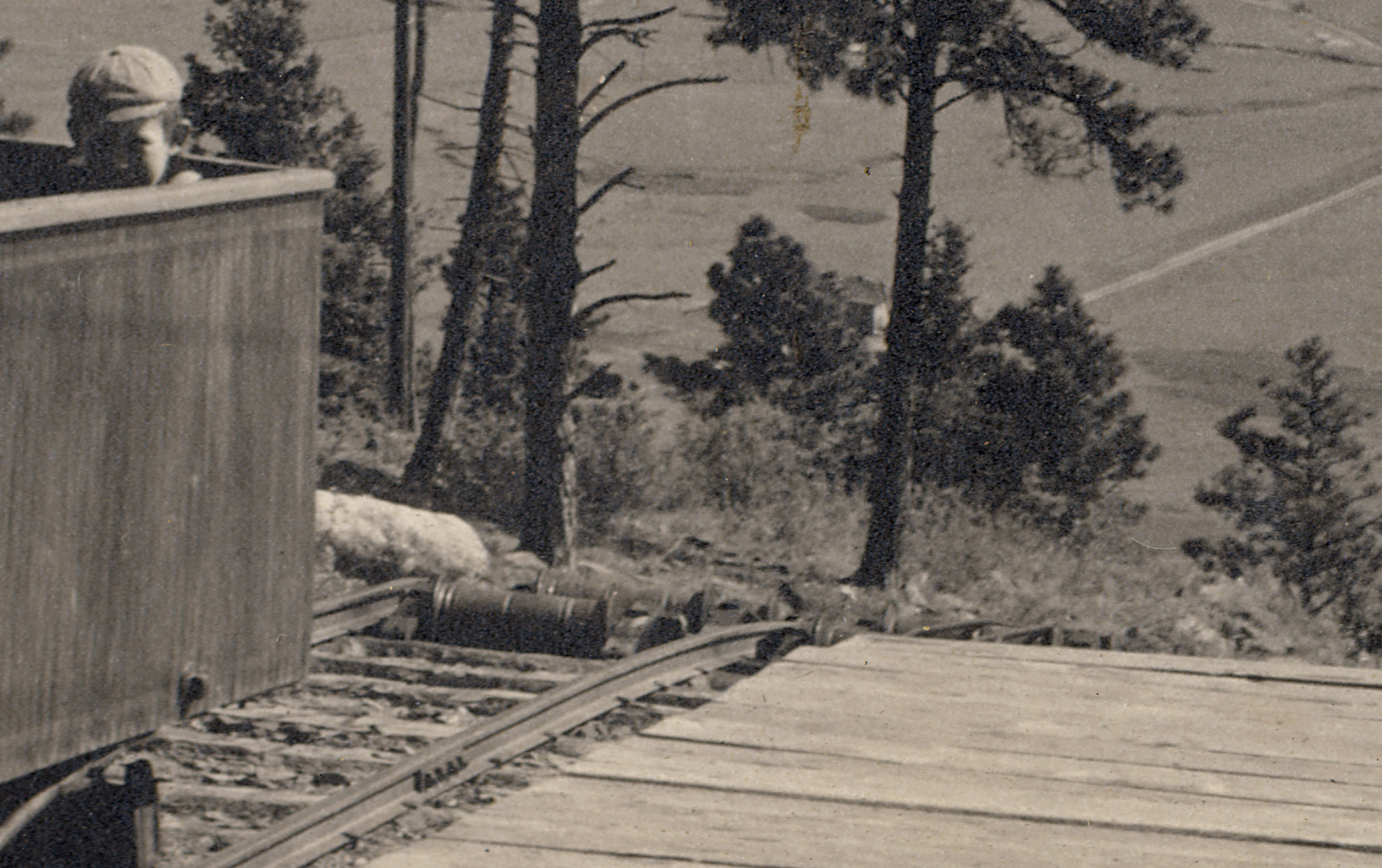
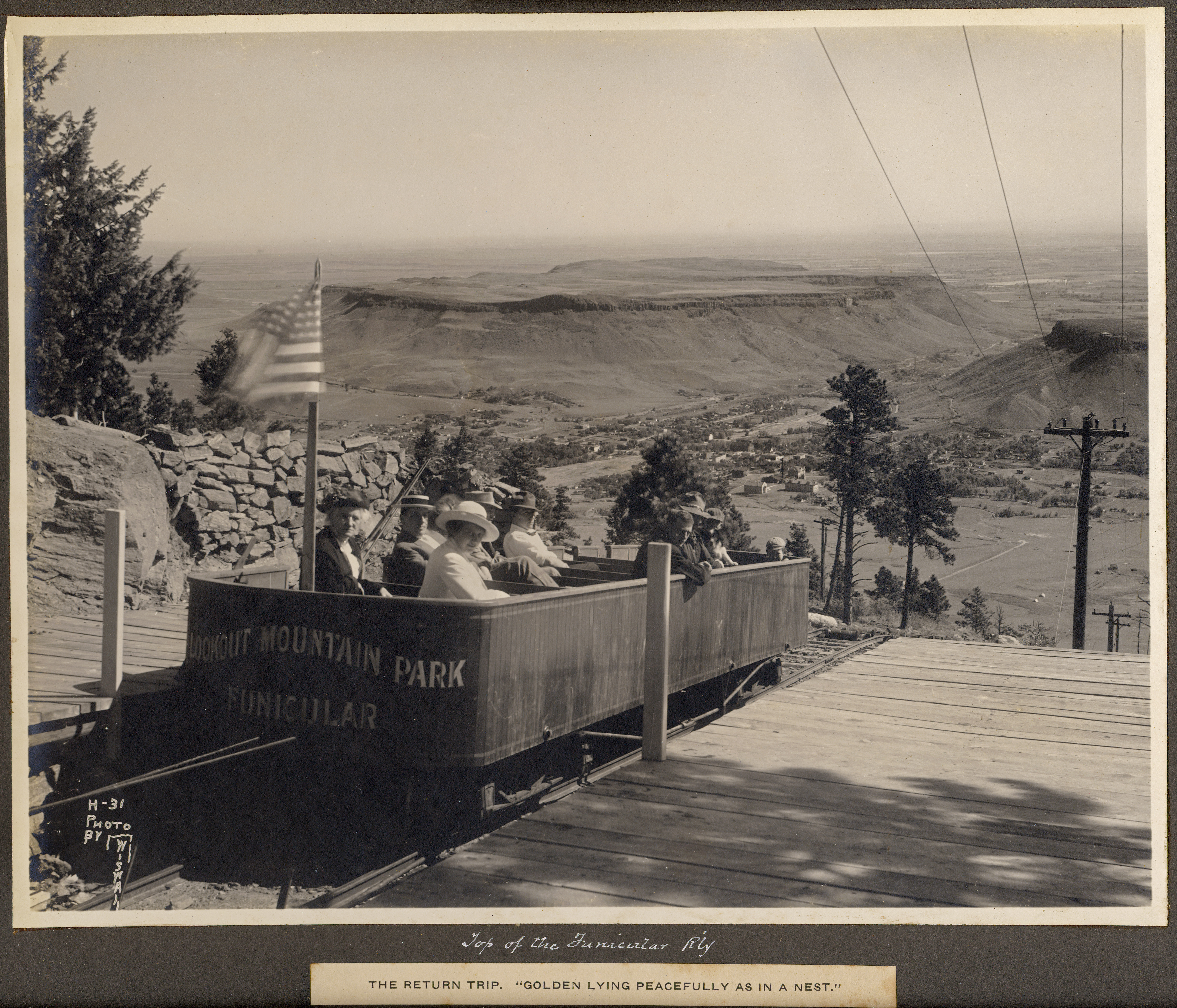
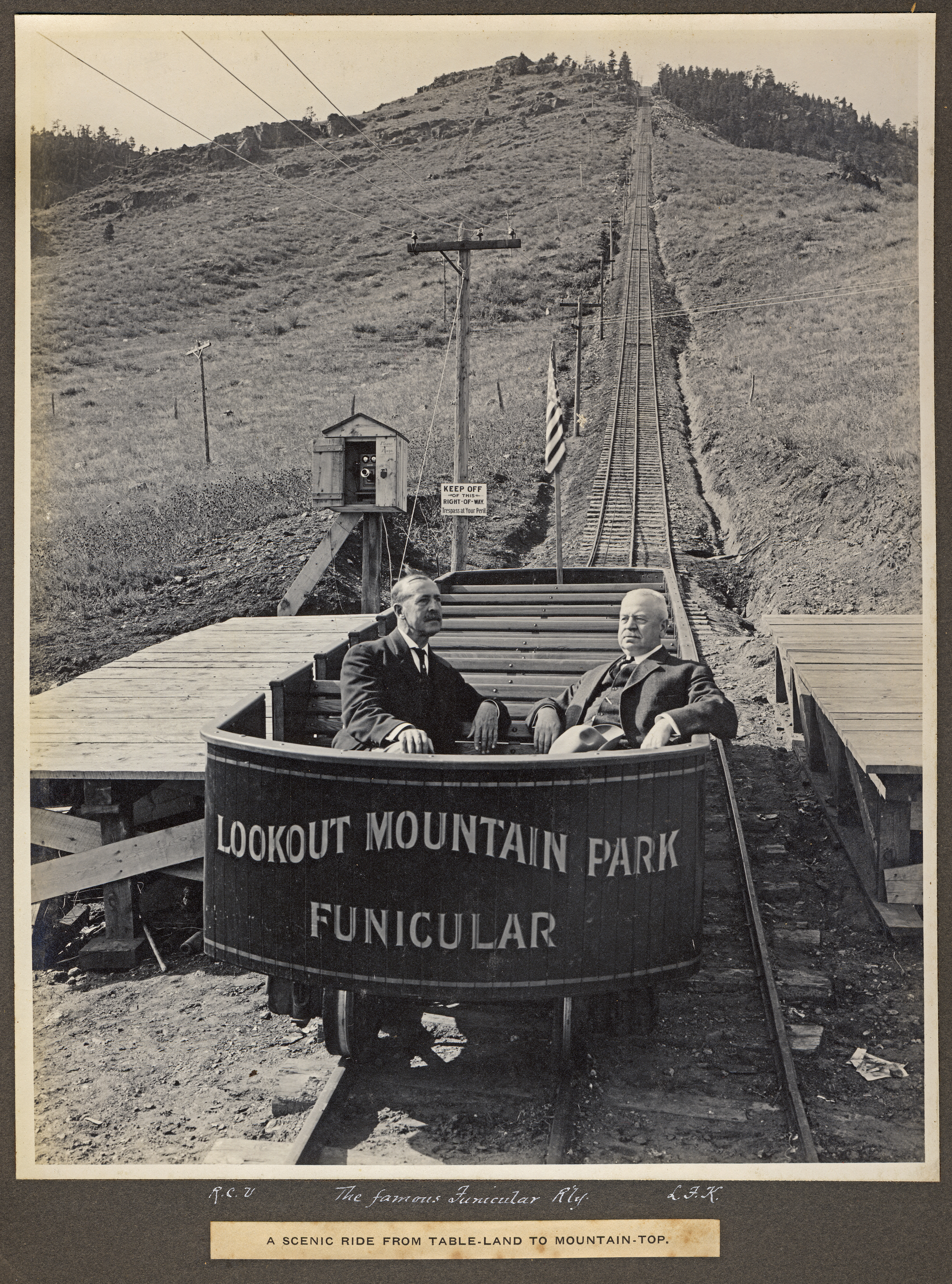
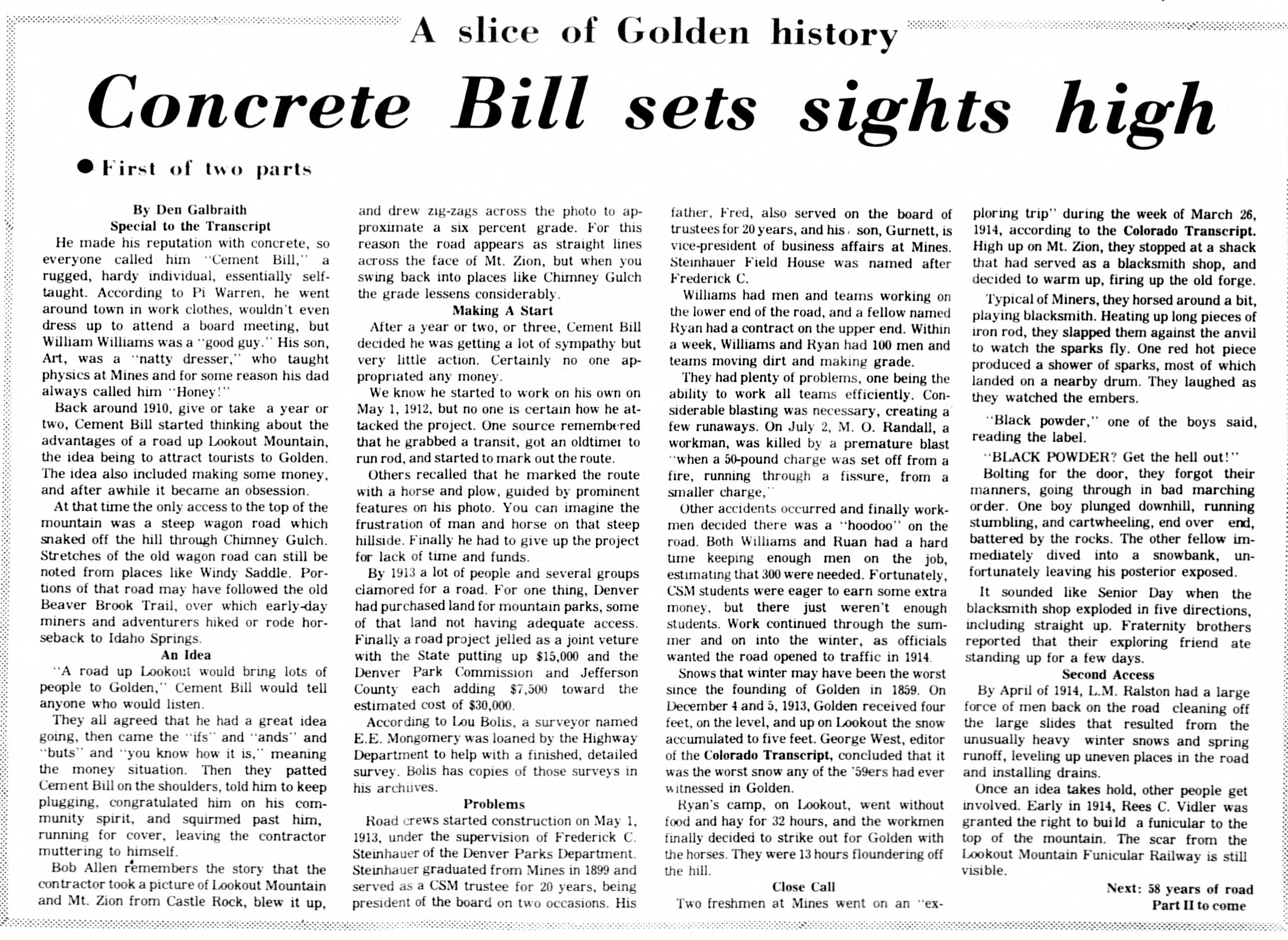
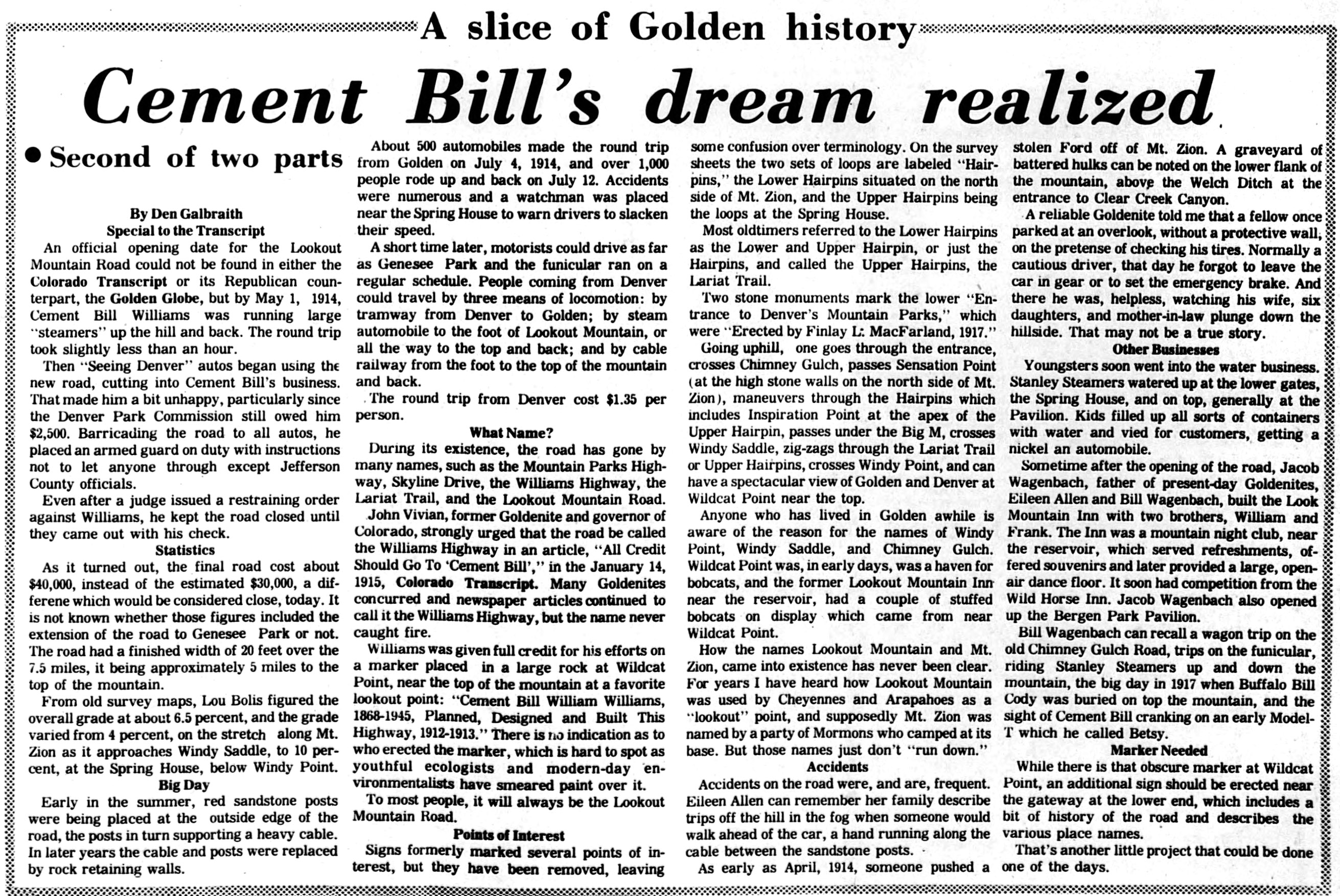
By July 4, another Colorado Transcript announced "The Lookout Mountain Park Development company expects to have the new funicular railroad completed this week. Two new cars with a carrying capacity of thirty-three passengers each, will arrive here today, and by Sunday it is expected everything will be in working order. The Tramway company will provide conveyances to take the people to the foot of the incline." Eventually a cable house with an electric drum hoist was built at the top, pulling one rail car up the mountain as the other descended as a counter weight over the 34 to 54 degree incline. They would pass each other about halfway up the mountain. The cable, strung the entire 1/2 mile length, slid in the middle of the railroad ties on rollers which were positioned at key locations to keep the cable from cutting into the wooden ties and prevent cable ware. Over time, deep grooves the width and shape of the cable strands would be ground into the rollers. For any trouble or emergency, a grounded rod in each car could signal the hoist engineer to stop. Looking out over the plains, the seats in each car faced away from the mountain and were tilted into a level position to prevent passengers from sliding out. At the top, an offloading deck stood overlooking the entire city of Golden. An article from an April, 1955 Colorado Wonderland magazine described the opening: After two delays, the funicular was officially opened July 27, 1912. Governor Shafroth of Colorado was there, as was Mayor Arnold of Denver, who drove the last spike. Golden never saw anything like the hubbub that followed. Vast numbers of people, tourists in Colorado by train, Denverites, local enthusiasts, all wanted a chance to take a ride into the sky. "Cement Bill" Williams formed the Williams Transportation and Investment Company and purchased seven Stanley Steamers which were waiting in a line near the interurban depot in Golden. Passengers would get off the open-air trams and run for the cars, with George Kain or Barney Schreiber urging and motioning them to hurry. Then, one by one the steamers would dash off in a cloud of dust for the mile and one-half trip to the incline's loading base on Lookout. As the stages unloaded, the sightseers scrambled out, rushing to the little ticket office on one side, and then got in line to wait for a seat in the funicular car.
The Colorado Wonderland article continued: They listened intently, holding their baskets in their laps as the operator, seated near "the latest automatic braking device" told them that from their seats they could see "the borders of Kansas, to Nebraska, with Eldorado Springs, Boulder and Palmer Lake in the foreground." They strained their eyes trying to see all this. (It was a good sales talk, but not exactly true.)
Rees Vidler lived with his family around the mountain from the top of the funicular. In 1912 he was 57 years old and already had mining conquests in Idaho Springs and Georgetown behind him. Wearing a waxed moustache, carrying his cane, always favoring a plaid cap and English tweeds, he'd screw his monocle into his eye and walk over to see his railroad going up and down his mountain. At times he'd address the picnickers, telling them of advantages of living on Lookout all the time. Then he'd casually refer them to the Lookout Mountain Development Company, of which he was head. During the fall of 1912 special interurbans, loaded until passengers were standing on the sides, ran on 15-minute schedules from Denver to Golden on week ends. A special rate of $1.50 round trip was set up, including a ride up and down the Famous Funicular. Once on top, the more daring ones could, for a slight additional fee, rent burros and ride even higher on various trails. It was very profitable for Rees Vidler. According to a Golden resident, Helen Ljungvall Johnston, a local tourist, "The trip started at the tramway depot where Foss Drug now stands. A Stanley Steamer, usually driven by Fred Landry, took us to the foot of the mountain where we would take the cable car to the top. On reaching the top, we would climb out and take a short hike until the cable car was ready to return to Golden. If one took this trip early in July, he would be privileged to see a field of columbines in full bloom."
As visitors admired the breathtaking view from the top, Vidler would corral them into his real estate office at the top of Lookout Mountain and give them his sales pitch for purchasing some mountaintop land with a view. In 1913 he gave to the city of Denver the ground surrounding the grave of Buffalo Bill, thus establishing the first of Denver’s Mountain parks system. About the same time, on August 24, 1913, Mr. and Mrs. Rees Vidler gave a garden party at their home on Lookout Mountain in honor of their future multimillionaire business partner and son-in-law, "Theodore Revillon, who early in September will claim Miss Katherine Vidler, the charming daughter of Mr. and Mrs. Vidler, for his bride."
Despite his parties, wealthy investor visits, the crowd pleasing funicular, sales pitches for a mountaintop resort including a posh hotel south of his "cottage," his development plans didn’t entirely work. However, he did make at least a couple of sales to a couple of wealthy locals. The February 6, 1915 Golden Weekly Globe reported a story with a slightly exaggerated headline: Building Boom Starts On Mount Lookout
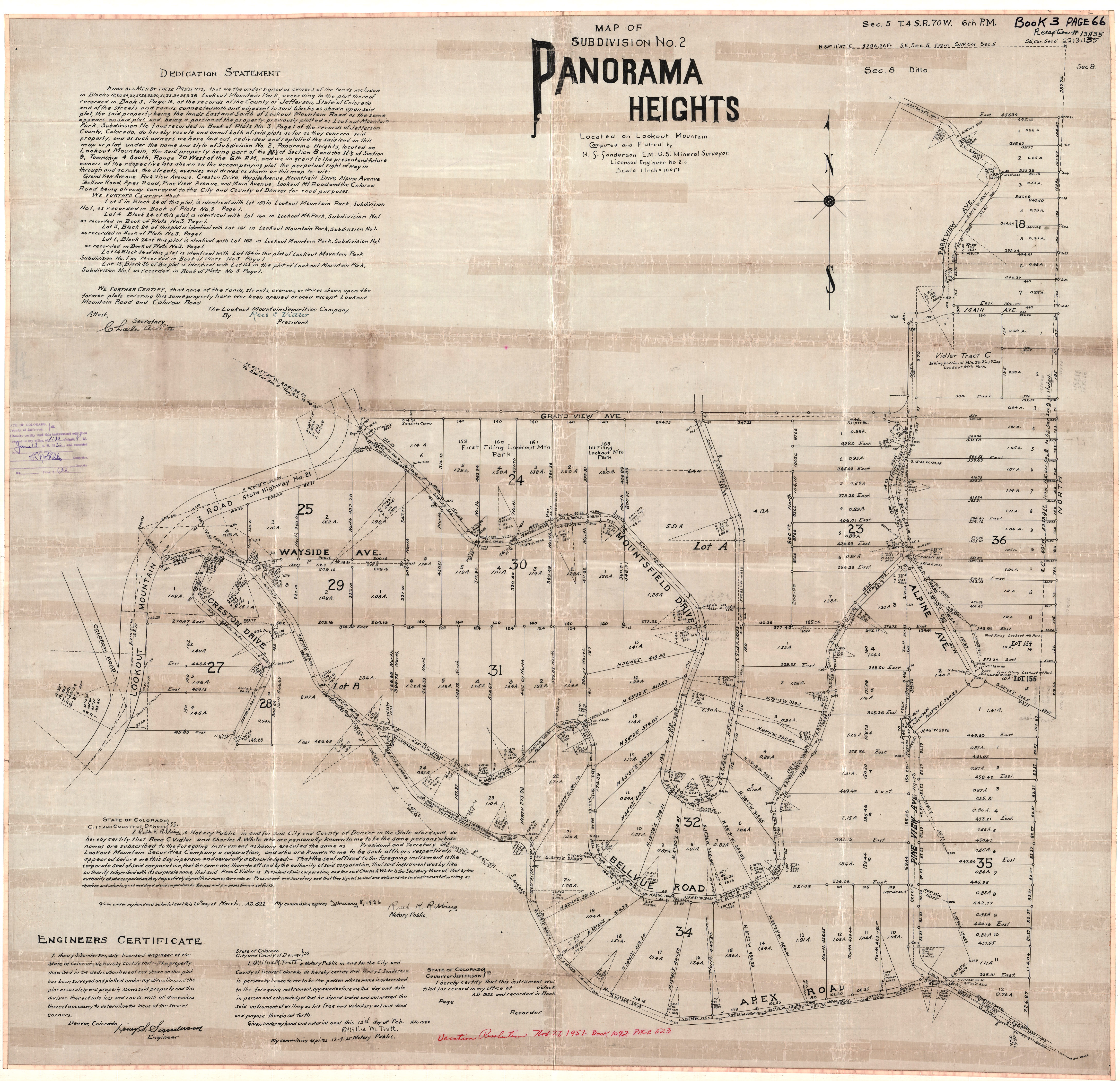
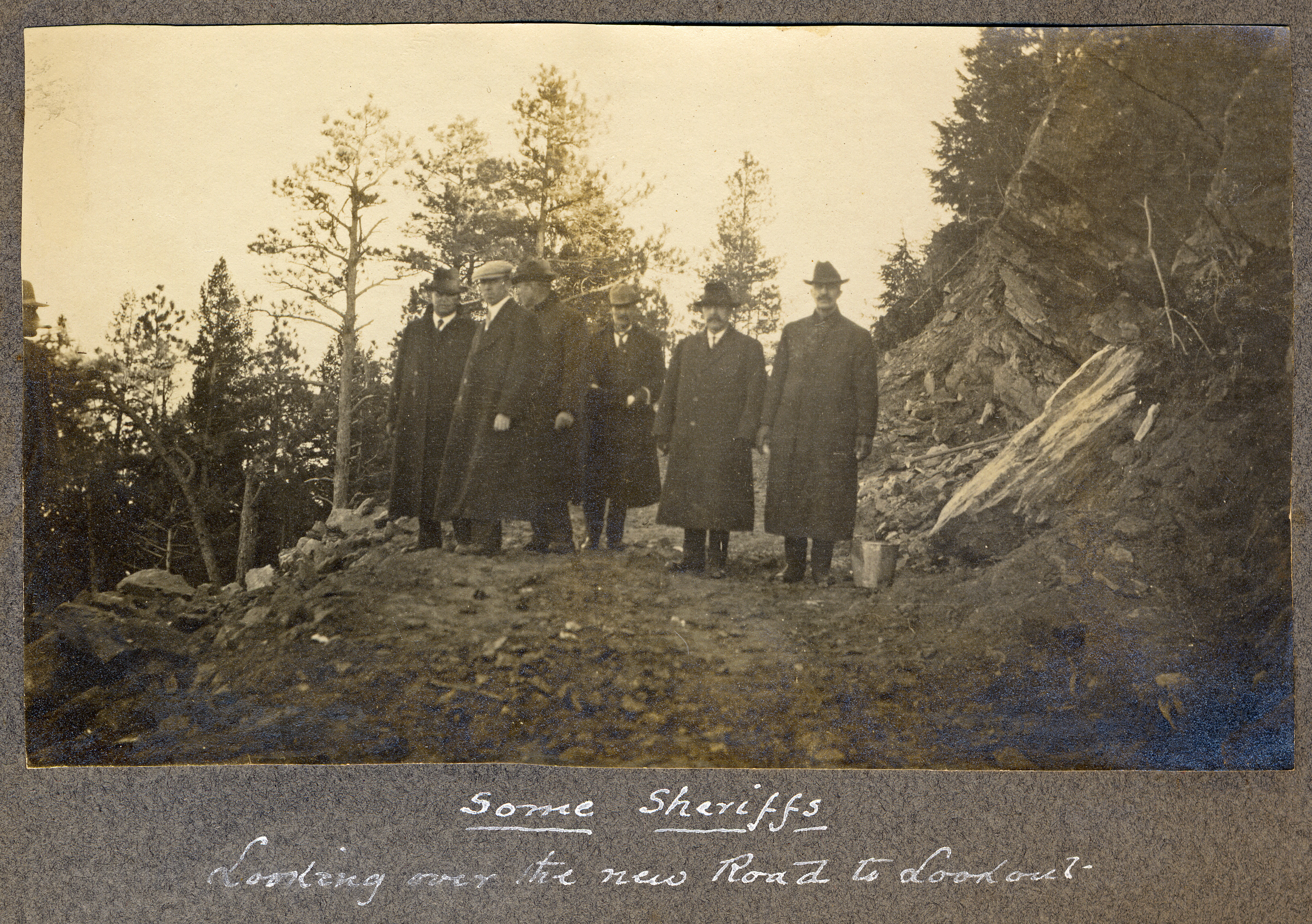
In 1919 all the funicular and property, part of the Lookout Mountain Park Development Company were sold off at a Sheriff's sale to pay creditor's claims. Despite this, and yet under another company name, the Lookout Mountain Securities Company with Rees C. Vidler as president, left behind a signed, 1922 surveyed plat for "Panorama Heights" subdivision which was filed with Jefferson County outlining home properties and named roads, many which still exist today.
Vidler’s development dream was never fully realized and just a few years later in 1925, his ashes were scattered over his beloved mountain. Finally in 1930, to add insult to injury, the sliding rails from Vidler’s "ride into the sky" caused a fire on his favorite mountain. The July 17 Jefferson County Republican reported: RAIL SPARKS CAUSE FOOTHILLS BRUSH FIRE But there are also forested oasis with meandering trails through stands of Ponderosa pine and fir trees filled with pine cones. In the quiet early morning, wild turkeys gobble as hairy woodpeckers thump, thump, thump, drilling into nooks and crannies searching for insects. Quirky and gravity defying pygmy and red-breasted nut-hatches effortlessly scale trees hunting and chirping as mountain chickadees sing their happy sounds. Large eared mule deer, alert to danger, quietly walk on the pine needle covered forest hillsides among the holly looking, Oregon grape plants with their spiny leaves and tiny clumps of yellow flowers. Black furred and long eared Abert’s squirrels prowl the picnic areas nibbling on pine cone seeds as silhouetted turkey vultures with wings spread, circle above the mountain catching warm updrafts radiating from the hillsides in the morning sun. Striped, least chipmunks skitter over moss covered boulders in the forested shadows as pine siskin with their yellow streaks under their wings sing from above. However, soon disrupting the morning chorus, a Harley rider guns his machine through the hairpin turns as he zips past a pair of riders on road bikes, each breathing hard and struggling through each pedal stoke. Tourists with a variety of midwest license plates shuffle their vehicles through the filled parking lots at the Windy Saddle trailhead and at the museum and grave site. Like so many places in Colorado, Lookout Mountain is a dichotomy. It has been a location of constant battles between development and maintaining what Mother Nature has provided. Early developers saw an opportunity to make a profit while others saw resources to be extracted and others a great location for a massive antenna. For many though, it is a joyride, a place to picnic, to test ones lungs, to explore history, to live among the views and a place to hike and explore while breathing in piney forest air.
|